

E-Ammonia for Shipping Decarbonisation: Fueling the Future of Sustainable Maritime Transport
The global shipping industry is responsible for transporting approximately 90% of world trade, making it a cornerstone of the global economy. However, maritime transport is also a significant source of greenhouse gas emissions, accounting for a substantial share of international transport-related carbon output. As the sector works toward ambitious climate targets and stricter environmental regulations, alternative fuels are becoming increasingly important. Among the emerging options, e-ammonia is gaining attention as a promising pathway to shipping decarbonisation.
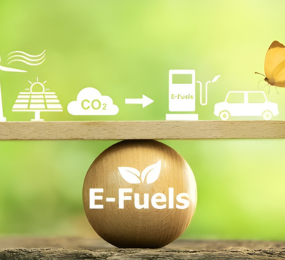
E-ammonia is a synthetic fuel produced using renewable electricity, making it fundamentally different from conventional ammonia derived from fossil fuels. It is created by combining green hydrogen—produced through water electrolysis powered by renewable energy—with nitrogen extracted from the atmosphere. The result is a fuel that can be produced with minimal carbon emissions and used as part of a low-carbon maritime energy system.
One of the main reasons e-ammonia is attracting interest is its potential to eliminate carbon emissions during fuel combustion. Unlike traditional marine fuels, e-ammonia contains no carbon molecules. This means that when used in appropriately designed engines or fuel cells, it does not generate carbon dioxide emissions at the point of use. For an industry under increasing pressure to reduce its environmental impact, this represents a significant advantage.
The shipping sector faces unique decarbonisation challenges. Large ocean-going vessels require energy-dense fuels capable of supporting long voyages and heavy cargo loads. While battery-electric solutions may work for short-distance applications, they are currently less practical for deep-sea shipping. E-ammonia offers a higher energy storage potential than many alternative solutions and can be transported and stored using technologies that are already familiar to parts of the maritime and industrial sectors.
Growing regulatory pressure is accelerating interest in alternative marine fuels. International decarbonisation targets and emissions reduction initiatives are encouraging shipowners and operators to explore cleaner fuel options. E-ammonia is increasingly viewed as a candidate capable of supporting compliance with future environmental requirements while helping organizations meet their sustainability commitments.
The development of ammonia-capable marine engines is also advancing rapidly. Engine manufacturers, shipbuilders, and technology providers are investing heavily in research and testing to ensure safe and efficient operation. Several demonstration projects and pilot vessels are already helping validate the technical feasibility of ammonia-powered shipping.
Infrastructure development remains a key factor in the successful adoption of e-ammonia. Large-scale deployment will require investments in production facilities, storage terminals, bunkering infrastructure, transportation networks, and port capabilities. Fortunately, ammonia is already widely traded globally for use in agriculture and industrial applications, providing an existing foundation that can support future maritime fuel supply chains.
Despite its potential, challenges remain. Producing e-ammonia requires significant quantities of renewable electricity, making energy availability and cost important considerations. Current production costs are generally higher than those of conventional marine fuels, although ongoing technological advancements and larger production volumes are expected to improve competitiveness over time.
Safety is another important consideration. Ammonia is a toxic substance and must be handled carefully throughout the supply chain. The maritime industry is actively developing safety standards, operational procedures, and crew training programs to ensure responsible fuel management and minimize risks.
Investment activity in e-ammonia continues to grow as governments, energy companies, shipping operators, and financial institutions recognize its potential role in the energy transition. Strategic partnerships are emerging across the value chain to support production, infrastructure development, and commercial deployment.
The path to maritime decarbonisation will likely involve multiple fuel solutions, but e-ammonia is increasingly positioned as one of the leading contenders for long-distance shipping. Its ability to provide carbon-free energy at the point of use, combined with growing industry support, makes it an important component of future sustainable shipping strategies.
As the maritime sector moves toward a lower-carbon future, e-ammonia has the potential to transform how vessels are powered, helping reduce emissions while supporting global trade and economic growth.
Takeaway Point:
E-ammonia offers a promising pathway for shipping decarbonisation by providing a low-carbon fuel produced from renewable electricity, green hydrogen, and atmospheric nitrogen, helping the maritime industry reduce emissions and meet future climate targets.
Learn more on our website: https://www.leadventgrp.com/event/3rd-annual-world-e-fuels-summit/register
For more information and group participation, contact us: [email protected]
Leadvent Group - Industry Leading Events for Business Leaders!
www.leadventgrp.com | [email protected]








Comment