

Floating Wind Europe: The Commercial Shift the Industry Has Been Waiting For
The question for floating offshore wind has changed. It is no longer "Can we build it?" It is "Can we build it profitably, at scale?" For Europe, that shift is happening right now.
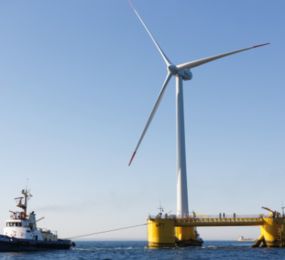
Hywind Scotland came online in 2017. WindFloat Atlantic followed. Turbines operated in Norwegian fjords and Portuguese waters, accumulating performance data and engineering confidence. The demonstration phase was delivered. What comes next is harder.
The Gap Between Proof and Pipeline
The global pipeline looks strong on paper. Capacity is set to exceed 16 GW installed or under construction by 2030, climbing to roughly 48 GW by 2035. Europe leads near-term growth. But the numbers mask a more difficult reality.
In January 2026, the UK's Blyth 2 floating wind project was cancelled. Even technically advanced projects fail without a clear commercial pathway. The LCOE for floating wind currently sits around USD 390/MWh, roughly four times the cost of fixed-bottom offshore wind. DNV projects that figure could fall to USD 100/MWh by 2060, but that depends on several things moving in the right direction:
- Policy frameworks designed for the actual cost of floating wind
- Supply chain development at meaningful volume
- Port and grid infrastructure built ahead of demand
- Financing structures that lenders can accept
Where the Real Work Is Happening
The important conversations today are not about turbine heights. They are about the infrastructure that makes commercialisation possible.
Ports remain a clear bottleneck. Floating wind platforms need large fabrication areas, specialised lifting equipment, and extended staging windows. Few European ports meet all these requirements independently. The FLOW Ports Alliance, which includes Associated British Ports, BrestPort, and Shannon Foynes, coordinates development plans to build distributed port capacity for multi-gigawatt pipelines.
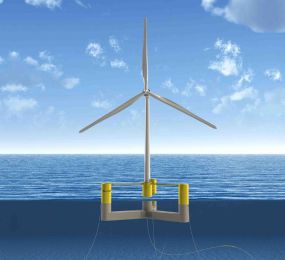
Mooring systems and dynamic power cables are still being refined for open-ocean environments. The Celtic Sea, the Norwegian Sea, and the waters off Scotland's north coast are none of them gentle proving grounds. Consistent, cost-effective performance across those sites is what separates a viable commercial model from an expensive exception.
Supply chain scale is the most consequential challenge. Floating wind adds USD 1,000 to 1,500 per kilowatt over fixed-bottom installations. That cost premium becomes acceptable only when supply chains produce at volume and projects run large enough to generate economies of scale.
Financing the Transition
Bankability is where demonstration projects and commercial projects diverge most.
Demonstration projects attract grants and patient equity. Commercial projects need project finance. Lenders require a clear risk profile, offtake certainty, and a credible construction path. The industry still waits for a final investment decision on a project above 500 MW, which analysts treat as the true bankability test.
Joint ventures have become the dominant response to capital risk. The Gwynt Glas JV secured a 1,500 MW floating wind project in the UK in 2025, structured to share the high costs of commercialising floating wind technology. European institutions, development banks, and project finance lenders are still working out what "bankable Floating Wind Europe" means in practice.
Policy Determines the Pace
The Horizon Europe ATLANTIC project, launched in October 2025, brings 13 industrial and academic partners across six countries together, backed by EUR 15 million in EU funding. Its purpose is to drive cost reduction through targeted research and industrial collaboration. Governments need to match that intent with:
- Auction frameworks that reflect floating wind's actual cost structure
- Revenue certainty that supports long-term supply chain investment
- Port and grid infrastructure funded ahead of commercial demand
ETIPWind estimates that reaching 20 GW of total installed capacity could bring the LCOE down to EUR 40 to 80 per MWh. That requires the right combination of volume, research, and policy commitment.
Coexistence with fishing communities also demands attention. As projects move into deeper waters, they intersect with established livelihoods. Social licence is earned, not assumed.
What the Sector Needs to Get Right
The debate over whether floating offshore wind can work is settled. The focus now is making it work commercially, at scale, and consistently. Key technical priorities include:
- Next-generation mooring and anchor systems built for 25-year open-ocean operations
- Dynamic power cables that perform reliably at commercial depths and distances
- Digital twins and predictive maintenance to reduce O&M costs for remote turbines
- Standardised platform designs that support high-volume fabrication
Operational data from existing pilot projects is equally critical. Early floating wind farms are accumulating years of performance data. Feeding that back into design and financing decisions will shape the next generation of projects.
Where Industry Leaders Are Meeting in 2026
If your organisation has a stake in the commercial future of floating wind, this is the room to be in. Register now for the 6th Annual Floating Wind Europe and secure your seat at Europe's leading floating wind forum, taking place on 23 and 24 June 2026 at the Radisson Blu Hotel, London Heathrow.
Organised by Leadvent Group, this two-day hybrid event brings together 150-plus pre-qualified experts for case studies, panel discussions, and structured networking. Confirmed speakers include senior representatives from Equinor, DNV, Ramboll, ABN AMRO, KfW IPEX, Green Giraffe, the Scottish Government, the Crown Estate, JERA Nex bp, and Aker Solutions.
The event draws professionals across the full value chain:
- Project developers and asset owners
- Project finance lenders and investment banks
- Engineering, consultancy, and technology firms
- Port, logistics, and O&M specialists
- Government and policy representatives
The demonstration era is over. The commercial era has started. Register for the 6th Annual Floating Wind Europe and be part of the conversations that will define what comes next.
FAQs
- Why does floating offshore wind cost more than fixed-bottom offshore wind?
Floating platforms operate in deep water where fixed foundations cannot be used. Mooring systems, dynamic cables, and installation methods are all more complex. With floating wind making up less than 0.5% of total offshore wind capacity, supply chain volumes remain low. As deployment grows, costs will come down.
- Which European countries lead floating wind development?
Norway has the longest operational track record through the Hywind projects. The UK has the most active commercial pipeline, with Crown Estate leasing rounds covering the Celtic Sea and Scottish waters. Portugal, France, and Spain each have pilot or pre-commercial projects underway.
- What is the biggest obstacle to commercial-scale deployment?
There is no single bottleneck. High costs limit bankability. Low supply chain volumes keep costs high. Port infrastructure is not yet built for large-scale fabrication. Resolving these requires coordinated action across developers, governments, financiers, and port operators.
- Who should attend the 6th Annual Floating Wind Europe?
The event suits senior professionals across the floating offshore wind value chain: developers, project finance teams, engineering and consultancy firms, technology suppliers, port operators, O&M engineers, and government representatives. With attendance capped at 150-plus pre-qualified delegates, every conversation counts.







Comment