


Programme Highlights

Key Topics & Discussions

Explore the key trends, challenges, innovations and strategic priorities shaping the industry, with focused discussions on practical solutions, emerging opportunities and the future of the sector.

Programme Highlights

Key Topics & Discussions

Two days of structured debate, case-study presentations, and working sessions across the most critical challenges in this sector.

The Evolution of EV Charging Infrastructure

The Evolution of EV Charging Infrastructure

EV charging infrastructure has evolved from scattered, slow residential and workplace chargers into a networked system of public, semi-public, and fleet charging points spanning urban centres, motorways, and depots. Early deployments relied on AC chargers with long charging times, suited to overnight or workplace parking.

EV charging evolutioncharging infrastructureDC fast chargingAC chargingOCPPISO 15118charging standardsinteroperabilityroaminggrid connectionload managementcharging networkfleet chargingpublic chargingworkplace chargingcharging business modelsEV adoptioncharge point operatorselectric mobilitycharging technology
An Overview of the European EV Charging Infrastructure Landscape

An Overview of the European EV Charging Infrastructure Landscape

The European EV charging landscape combines rapid public network growth with wide differences between countries in density, maturity, and regulation. The Alternative Fuels Infrastructure Regulation sets minimum charging power requirements along major road corridors and in urban nodes, creating a baseline for deployment.

European EV chargingAFIRAlternative Fuels Infrastructure Regulationcharging corridorscharge point operatorsCPOmobility service providerMSPpublic charging Europecharging densityNetherlands chargingGermany chargingCEE EV charginggrid capacitypermittingcharging tendersEV infrastructure marketcharging coverageEuropean mobilitycharging deployment
The Future of EV with V2X Technology and Ultra-Fast Charging

The Future of EV with V2X Technology and Ultra-Fast Charging

Vehicle-to-everything (V2X) technology and ultra-fast charging are set to change how electric vehicles interact with the grid, buildings, and each other. Ultra-fast chargers delivering 350 kW and above can add hundreds of kilometres of range in minutes, but they place heavy demands on grid connections, requiring battery buffering, load management, and careful site design.

V2Xvehicle-to-gridV2Gvehicle-to-homevehicle-to-buildingbidirectional chargingultra-fast charging350 kW chargingISO 15118plug and chargegrid servicesbattery bufferingload managementaggregationflexibility marketsEV batteriescharging standardsdemand responsesmart chargingEV grid integration
Testing and Certifying EV Charging Infrastructure

Testing and Certifying EV Charging Infrastructure

Testing and certifying EV charging infrastructure verifies that chargers are safe, interoperable, reliable, and compliant with applicable standards before and during operation. Type testing assesses electrical safety, electromagnetic compatibility, environmental durability, and communication performance against standards such as IEC 61851 and IEC 61851-23 for DC charging, along with national requirements.

EV charger testingcharging certificationIEC 61851IEC 61851-23type testingconformity assessmentinteroperability testingISO 15118 testingplug and charge certificationelectrical safetyEMC testingacceptance testingcharger reliabilityuptime monitoringaccredited certificationplugfestcharging standards compliancecommissioningcharging equipmentEV charger quality
EV Charging Business Models and B2B Pricing Between MSP and CPO

EV Charging Business Models and B2B Pricing Between MSP and CPO

EV charging business models are shaped by how value is shared between charge point operators (CPOs), which own and operate chargers, and mobility service providers (MSPs), which sell charging access to drivers. Under a typical roaming arrangement, the MSP holds the customer relationship and pays the CPO a wholesale tariff, while the CPO receives payment for energy delivered and related services.

EV charging business modelsMSP CPOB2B pricingwholesale tariffroaming agreementscharge point operatormobility service providerper kWh pricingsession feessubscription pricingHubjectroaming platformOCPIcontract termsservice level agreementscharging marginsutilisationEV charging economicstariff designcharging revenue
Embracing Artificial Intelligence to Drive EV Growth

Embracing Artificial Intelligence to Drive EV Growth

Artificial intelligence is helping EV charging operators improve utilisation, reliability, and grid integration as networks grow in size and complexity. Machine learning models forecast demand by location and time, guiding decisions on where to install new chargers and how to price sessions. Predictive maintenance analyses fault logs and telemetry to anticipate failures, reducing downtime and service costs.

AI EV chargingmachine learningdemand forecastingpredictive maintenancesmart charging algorithmsdynamic pricingcharging utilisationsite selectionroute planningstate of charge estimationEV growthcharging analyticstelemetryfault predictiongrid optimisationpersonalised recommendationsEV technologydigital chargingAI in mobilitycharging network optimisation
Programme

Explore Our Agenda

Case Study
08:40AM — 09:05AM

Charging Ahead: Unleashing the Future of BEV Charging Capability

  • EV Market growth and regional trends
  • Impact of high voltage architectures in vehicle charging
  • Advancements in battery and charging technologies
  • Significance of charging curve linearity
  • Current status and expectations of DC charging infrastructure

Speaker
Claudio Vittori
Claudio Vittori

Commercial Enablement Principal | Plan & Build, S&P Global Mobility

Case Study
09:05AM — 09:30AM

A pan-European Electric Road Network would make Decarbonization Cheaper, Quicker and More Equitable

  • Industry and voter resistance to EU decarbonization policy today is rational and expected.
  • Europe should build a pan-European Electric road network, to enable in-motion charging of vehicles.
  • A mix of cable-based and in-motion charging would be quicker to scale up.
  • Electric roads would make electric vehicles and public charging cheaper.
  • Incentives would change for key stakeholders to allow for strengthened EU decarbonization policy.
Speaker
Jakob Rogstadius
Jakob Rogstadius

Senior Researcher, RISE, Mobility and Systems

Case Study
09:30AM — 09:55AM

Why Regulatory Stability Matters for EV Charging Rollout: AFIR, CO2 Standards and Investment Certainty

  • EU regulatory framework for EV charging infrastructure
  • The role of AFIR and CO2 standards in scaling deployment
  • Policy stability vs. regulatory revision: current debates
  • Impacts on investment certainty, market development and EU competitiveness
Speaker
Thomas Neumann
Thomas Neumann

Advocacy Director, ChargeUp Europe

Case Study
09:55AM — 10:20AM

Quality Management in the Ecosystem Charging: Needs and References for a common Approach Cross Industry Charging

  • Do we sing from the same pages talking about charging?
  • Do we have HappyCustomers@Charging?
  • Do we have a common view on charging failures?
  • Do we have the same understanding of customer needs?
  • Do we have a common approach to solve charging problems?
Speaker
Marcus Liertz
Marcus Liertz

Head of Charging Quality, BMW Group

Case Study
10:20AM — 10:45AM

AFIR, ISO 15118-20 and the Path to Reliable Interoperability

The Alternative Fuels Infrastructure Regulation (AFIR) establishes a new European baseline for EV charging, mandating improved network availability and seamless interoperability.

While these rules seem purely regulatory, they force complex technical standards like ISO 15118-20 into the core of charging station development.

Current validation methods are often inefficient because they test communication and electrical systems in isolation, leading to integration risks and delays.

As AFIR becomes mandatory, manufacturers must ensure chargers work reliably across all functions, including communication, power, security, and vehicle compatibility.

To address this, the presentation proposes a unified, automated testing workflow that combines protocol conformance with grid and vehicle emulation.

This integrated approach allows developers to identify failure modes early and ensures systems are robust against cybersecurity threats and electrical disturbances. Attendees will learn how these advanced testing strategies accelerate certification and prepare infrastructure for future bidirectional and grid-interactive services.

Speaker
Alexey Telegin
Alexey Telegin

Power Solutions Engineering Lead, Keysight Technologies

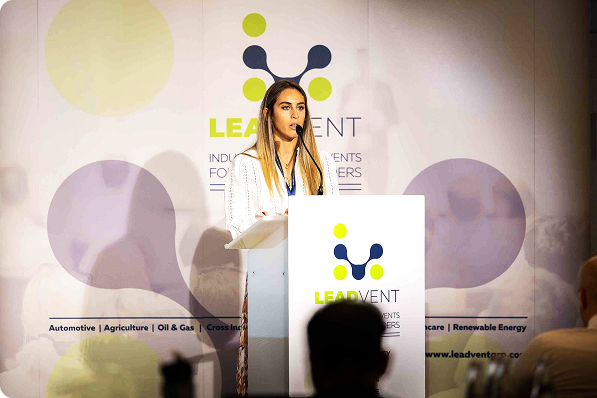
Speaker at podium
Live · 240+ speakers on stage
Share Your Expertise

Become a Speaker

If you'd like to join us as a speaker, fill out the “Become a Speaker” form below and our programme team will be in touch. Alternatively, reach out directly to Mark Perry:

markp@leadventgrp.com