

E-Fuels: Bridging the Gap to a Cleaner Energy Future
As the global conversation on climate change continues to grow louder, one challenge remains clear: not all parts of the economy can be electrified easily. While electric vehicles and renewable energy have become the public face of decarbonization, sectors like aviation, shipping, and heavy-duty transportation are far more complex. They require high energy density, long range, and reliability in demanding environments.
This is where E-fuels step in not as a silver bullet, but as a practical, scalable solution to a very real problem.
What Are E-Fuels?
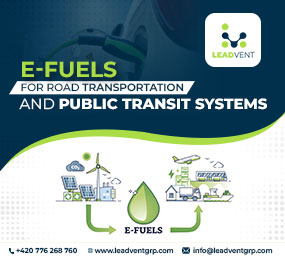
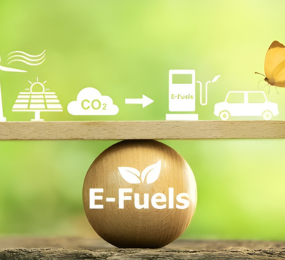
E-fuels, or electrofuels, are synthetic fuels produced by combining green hydrogen (created via electrolysis using renewable electricity) with captured carbon dioxide. The result is a liquid fuel such as e-diesel, e-kerosene, or e-methanol that can power existing internal combustion engines, jet turbines, or ship engines with significantly reduced greenhouse gas emissions.
Unlike fossil fuels, e-fuels are manufactured using renewable inputs and captured emissions, making them carbon-neutral when produced sustainably. This not only makes them compatible with climate goals, but also with the current fuel infrastructure an advantage that shouldn't be underestimated.
Why E-Fuels Matter
For industries that rely heavily on combustion engines and cannot easily transition to electricity or hydrogen gas, e-fuels offer a much-needed middle ground. Airlines, for example, are under increasing pressure to reduce their emissions but cannot replace jet engines overnight. E-kerosene can be used in today’s aircraft with minimal changes to refueling logistics.
The same applies to the maritime industry. Global shipping is responsible for nearly 3% of annual CO? emissions, and yet it remains one of the hardest sectors to decarbonize. With e-methanol or e-diesel, vessels can cut their emissions without requiring a total overhaul of their engines or supply chains.
Barriers to Overcome
Despite their promise, e-fuels are still in the early stages of adoption. High production costs and limited scale are the biggest hurdles. Producing hydrogen through
electrolysis is energy-intensive, and capturing carbon adds further complexity. As of now, e-fuels remain significantly more expensive than their fossil counterparts.
But with governments and industries investing in clean energy infrastructure, costs are expected to fall. Europe is already taking the lead with mandates requiring increased use of sustainable aviation fuels, including e-fuels, by 2030.
In addition, the growth of renewable energy capacity globally means there will be more clean electricity available to power the electrolysis process further improving the viability of e-fuel production.
A Complement, Not a Competitor
It’s important to see e-fuels as a complement to other clean technologies not a competitor. Where batteries and green hydrogen are appropriate, they should be used. But where energy density, range, and engine compatibility matter most, e-fuels offer a smart, forward-looking solution.
Takeaway Point: E-fuels provide a realistic path toward decarbonizing sectors that can’t easily switch to electric power. By utilizing existing infrastructure and reducing lifecycle emissions, they help close the gap between where we are and where we need to be in the global energy transition.
Learn more on our website: https://www.leadventgrp.com/event/2nd-annual-world-e-fuels-summit/register
For more information and group participation, contact us: [email protected]
Leadvent Group - Industry Leading Events for Business Leaders!
www.leadventgrp.com | [email protected]









Comment