

E-Fuels in Aviation: Bridging the Net-Zero Gap
The aviation industry stands at a crossroads. With rising passenger demand and mounting climate pressures, the sector must find solutions that balance growth with environmental responsibility. One of the most promising innovations emerging is e-fuels synthetic fuels created using renewable electricity, captured carbon dioxide, and water. These fuels have the potential to bridge the net-zero gap in aviation, offering a pathway where traditional alternatives fall short.
What Are E-Fuels?
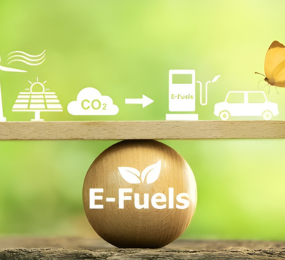
E-fuels, also known as synthetic fuels or power-to-liquids, are produced through a process that combines green hydrogen (made from renewable electricity) with carbon dioxide captured from the atmosphere or industrial sources. The result is a liquid fuel that can directly replace conventional jet fuel. Crucially, e-fuels are compatible with existing aircraft engines and fueling systems, meaning airlines can adopt them without waiting for new aircraft technologies.
Why They Matter for Aviation
Aviation is considered one of the hardest sectors to decarbonize. While battery-electric and hydrogen-powered planes may one day handle short-haul flights, long-haul aviation requires high energy density fuels that are not yet replaceable by these technologies. E-fuels provide a viable option, enabling deep emissions reductions without altering infrastructure or aircraft fleets. On a lifecycle basis, e-fuels can reduce emissions by up to 90% compared to fossil jet fuel.
Opportunities for Scaling
The promise of e-fuels goes beyond emissions reduction. Their production can stimulate new industries, foster cross-border energy trade, and accelerate investment in renewable electricity. Regions with abundant renewable resources, such as parts of Africa, the Middle East, and Latin America, could emerge as global hubs for e-fuel production, supplying markets worldwide. This global potential makes e-fuels not just a climate solution but also an economic opportunity.
The Challenges Ahead
Despite their promise, e-fuels face significant challenges. Production costs remain high, several times greater than conventional jet fuel making them currently uncompetitive without strong policy support. Scaling production also requires enormous amounts of renewable electricity, water, and infrastructure. Building this ecosystem will demand collaboration between governments, energy producers,
airlines, and investors. Without coordinated global action, e-fuels risk remaining a niche rather than a mainstream solution.
A Bridge, Not the Whole Answer
While e-fuels can play a transformative role, they are not a silver bullet. To reach net-zero aviation by 2050, a broad mix of solutions will be necessary: operational efficiencies, improved aircraft design, sustainable aviation fuels from waste and bio-based feedstocks, and eventually hydrogen technologies. E-fuels are the bridge helping the industry cut emissions significantly while those future innovations mature.
Conclusion
E-fuels hold enormous potential to reshape aviation’s environmental footprint. They represent a rare combination of technological feasibility and compatibility with current systems, making them one of the strongest near- to mid-term tools for decarbonization. With the right policies, investments, and partnerships, e-fuels could be a cornerstone of aviation’s path to net-zero.
Takeaway Point: E-fuels are not the sole answer, but they are a critical bridge offering aviation an immediate, scalable way to reduce emissions while the industry transitions toward a fully net-zero future.
Learn more on our website: https://www.leadventgrp.com/event/2nd-annual-world-e-fuels-summit/register
For more information and group participation, contact us: [email protected]
Leadvent Group - Industry Leading Events for Business Leaders!
www.leadventgrp.com | [email protected]












Comment