

Floating Wind Economics: When Will Costs Compete with Bottom-Fixed?
The global energy transition has placed offshore wind at the center of the renewable power mix. While bottom-fixed turbines dominate today’s offshore wind landscape, floating wind technology is gaining momentum as the industry seeks to unlock deeper waters and expand renewable capacity. Yet, a central question remains: when will floating wind costs compete with bottom-fixed?
The Economic Gap Between Floating and Bottom Fixed
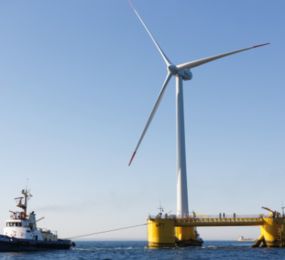
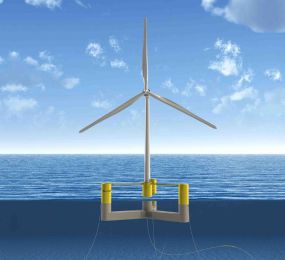
Currently, floating wind projects remain more expensive to develop and operate compared to bottom-fixed systems. Bottom-fixed foundations monopiles, jackets, and gravity bases have benefited from decades of deployment, standardization, and economies of scale. In contrast, floating platforms are still in their early stages, requiring extensive engineering, specialized vessels, and bespoke supply chains.
Estimates show that floating wind costs are currently 50–100% higher than bottom-fixed installations. Much of this cost gap lies in fabrication, installation, and maintenance, as floating structures demand more complex anchoring systems and mooring technology.
Pathways to Cost Reduction
Despite current challenges, the potential for floating wind to achieve cost competitiveness is strong. Industry experts identify three main drivers for closing the gap:
1. Economies of Scale – As more projects are deployed, the cost of floating platforms, anchors, and cables will fall, following a learning curve similar to bottom-fixed.
2. Standardization and Industrialization – Moving from custom-built designs to standardized, mass-produced units will cut costs significantly, particularly in fabrication and logistics.
3. Technological Innovation – Advancements in materials, digital monitoring, and autonomous maintenance systems will streamline operations and reduce long-term costs.
When Will Floating Wind Compete?
Forecasts vary, but many industry analysts believe floating wind could reach cost parity with bottom-fixed projects by the early to mid-2030s. This timeline depends on scaling up pilot projects, building local supply chains, and continued policy support. Some markets, such as Japan, Norway, and the UK, are accelerating development
with strong incentives, positioning floating wind as a viable contributor to their energy mix within the decade.
Why Cost Competitiveness Matters
Floating wind opens vast new areas of the ocean that are too deep for bottom-fixed foundations, particularly in regions such as the U.S. West Coast, Mediterranean, and parts of Asia. These areas not only expand the renewable energy resource base but also bring clean energy closer to demand centers. Achieving cost competitiveness will be crucial for attracting large-scale investment and enabling floating wind to move from demonstration projects to mainstream deployment.
Conclusion
Floating wind economics remain challenging, but the trajectory toward cost competitiveness is clear. Through scale, innovation, and global collaboration, floating wind has the potential to stand shoulder to shoulder with bottom-fixed within the next decade. The question is less about “if” and more about “when.”
Takeaway Point: Floating wind may currently be costly, but with scale, innovation, and policy support, it is on track to rival bottom-fixed offshore wind by the 2030s, unlocking vast new renewable energy potential.
Learn more on our website: https://www.leadventgrp.com/event/6th-annual-floating-wind-europe/register
For more information and group participation, contact us: [email protected]
Leadvent Group - Industry Leading Events for Business Leaders!
www.leadventgrp.com | [email protected]










Comment