

Floating Wind: Expanding Offshore Energy Beyond Fixed Foundations
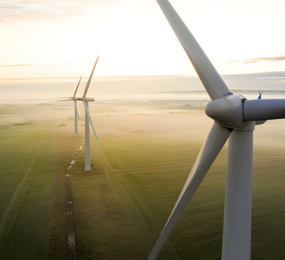
Offshore wind has become one of the most reliable pillars of the global renewable energy mix. Yet, much of its growth to date has been limited to shallow waters where turbines can be fixed directly to the seabed. Floating wind changes that equation. By allowing turbines to operate in deeper waters, this technology is opening up vast new areas for clean energy development and reshaping the future of offshore power.
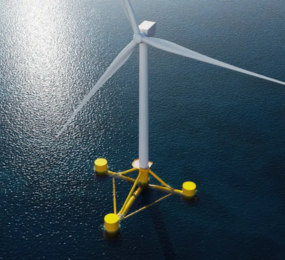
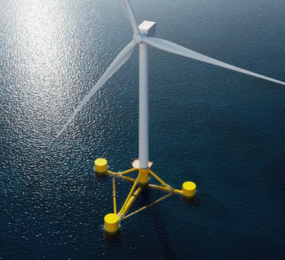
At its core, floating wind involves mounting wind turbines on buoyant platforms anchored to the seabed with mooring systems rather than fixed foundations. These platforms are designed to remain stable in challenging marine conditions, balancing waves, currents, and strong winds while maintaining efficient energy generation. Several platform designs exist, including spar, semi-submersible, and tension-leg systems, each suited to different water depths and site conditions.
The appeal of floating wind lies in access. Many coastal regions with strong and consistent wind resources have deep waters close to shore, making traditional offshore wind unviable. Floating technology allows developers to tap into these high-quality wind zones, often with less visual impact from land and reduced conflicts with shipping lanes or fishing areas. For countries with steep continental shelves, floating wind offers a realistic path to large-scale offshore renewable capacity.
Technological progress over the past decade has moved floating wind from demonstration to early commercial deployment. Pilot projects in Europe and Asia have shown that floating turbines can operate reliably while delivering competitive performance. Lessons learned from these projects are now informing larger developments, with developers focusing on cost reduction, standardization, and supply chain efficiency.
Cost remains a central challenge, but the trajectory is encouraging. As with fixed-bottom offshore wind, economies of scale, improved manufacturing processes, and more efficient installation methods are steadily reducing expenses. Floating wind also benefits from offshore oil and gas expertise, particularly in marine engineering, anchoring systems, and operations in harsh environments. This crossover is helping accelerate innovation and workforce transition.
Grid integration and infrastructure planning are also gaining attention. Floating wind projects often require new approaches to offshore substations, cable design, and maintenance strategies. Advances in digital monitoring and predictive maintenance are playing a key role in improving reliability and reducing operational costs over the life of a project.
From a policy perspective, governments are increasingly recognizing floating wind as a strategic asset. Clear permitting frameworks, long-term revenue support, and investment in ports and fabrication facilities are essential to scaling the sector. Collaboration between policymakers, developers, and coastal communities is helping ensure projects deliver both economic and environmental benefits.
Floating wind is not a replacement for fixed offshore wind, but a powerful complement. Together, they significantly expand the global offshore wind potential, bringing clean energy to regions that were previously out of reach.
Takeaway Point
Floating wind unlocks deep-water wind resources, offering a scalable and increasingly viable solution that can dramatically expand offshore renewable energy capacity worldwide. Learn more on our website: https://www.leadventgrp.com/event/6th-annual-floating-wind-europe/register
For more information and group participation, contact us: [email protected]
Leadvent Group - Industry Leading Events for Business Leaders!
www.leadventgrp.com | [email protected]





Comment