

Why Floating Solar Matters for Europe's 2050 Net-Zero Targets
Europe's race to climate neutrality by 2050 is among the most ambitious energy transitions in modern history. Renewables accounted for 47.5% of EU electricity consumption in 2024, and in June 2025, solar became the EU's single largest electricity source for the first time. Net-zero demands more, though. It requires innovation in where and how Europe deploys clean energy, and water-based solar is emerging as a practical response.
A Land Problem That Water Can Solve
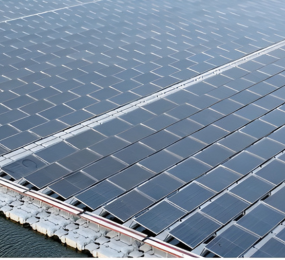
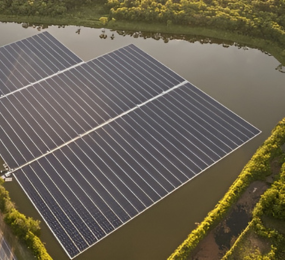
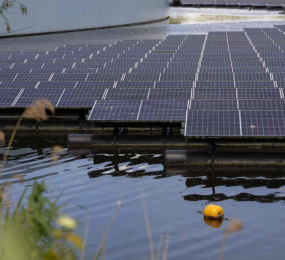
In densely populated EU nations such as the Netherlands, Belgium, and Germany, land is a persistent barrier to solar expansion. Agriculture, protected habitats, and urban development leave little room for large-scale ground-mount arrays. The floating solar panel offers a direct answer: solar technology mounted on buoyant platforms over reservoirs, irrigation ponds, and water treatment facilities.
The European Commission has taken note. Its 2025 Innovative Solar Energy Roadmap calls on Member States to allocate at least 5% of new renewable energy capacity to emerging technologies, naming floating solar among them. This is no longer a niche pilot concept. It now holds a formal place in Europe's decarbonization strategy.
Key advantages of water-surface deployment:
- No land-use conflict: Productive farmland and natural habitats stay untouched
- Lower infrastructure costs: Many water bodies sit near existing grid connections, cutting transmission expenses
- Dual-use efficiency: Reservoirs and hydropower dams can host FPV systems while sharing existing transmission lines
Performance That Goes Beyond Clean Power
Floating solar does not just solve a location problem. It delivers stronger performance than many land-based alternatives.
Water keeps panel temperatures significantly lower than ground-mounted systems, producing an energy yield increase of 5 to 15% in real-world deployments. The advantage is most noticeable during summer, when heat limits the output of conventional panels.
The environmental benefits strengthen the case further:
- Water conservation: Covering 10% of a water body's surface cuts evaporation by up to 30%, which matters in drought-prone southern European regions
- Algae management: FPV systems suppress harmful algal blooms by reducing light penetration and lowering water temperatures
- Hydropower integration: Co-locating Solar PV arrays on dam reservoirs lets developers use existing grid connections. Solar peaks in summer while hydro holds reserves year-round, producing a more stable power supply
How Floating Solar Fits the EU's 2050 Net-Zero Framework
The EU's path to climate neutrality under the European Green Deal calls for near-complete decarbonization of the electricity sector. Solar holds a key position under the Net Zero Industry Act, which aims to scale domestic clean technology manufacturing and reinforce energy security.
The numbers reflect the scale of ambition:
- The IEA's Net Zero Scenario calls for overall solar capacity to grow roughly 20-fold from early-2020s levels
- The EU's installed solar capacity reached an estimated 406 GW in 2025, yet the 2030 and 2050 goals demand continued momentum
- Research in Nature Water finds that floating photovoltaics on over one million water bodies globally could generate approximately 14,906 TWh per year, exceeding current global electricity demand
As permitting frameworks improve and platform costs fall, FPV's contribution to the EU's 2030 target of a 42.5% renewable energy share will grow.
Challenges the Industry Is Actively Solving
Floating solar carries real engineering and commercial challenges. The industry recognises them and is working through practical solutions.
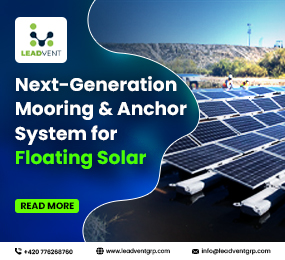
- Mooring and anchoring: Variable water conditions demand specialised engineering, particularly for offshore sites
- Upfront costs: Installation costs exceed ground-mount systems, though higher yields and lower land costs offset this over the project lifecycle
- Offshore durability: Saltwater and marine conditions require purpose-built materials, and European pilots are proving that these challenges are manageable
- Permitting: Projects must navigate energy regulation and water management law simultaneously
France commissioned its first offshore floating solar farm in the Mediterranean in 2023. A 1 MW offshore FPV demonstrator will begin operations at the Port of Valencia in 2026. Each completed project lowers the risk for those who follow.
Join the Conversation in Amsterdam
The 6th Annual Floating Solar PV Forum, hosted by Leadvent Group, takes place on 6th and 7th May 2026 at the Steigenberger Airport Hotel in Amsterdam. Leadvent Group organises specialist energy industry conferences that connect senior decision-makers, engineers, developers, financiers, and researchers. This forum ranks among the most established events in the global floating solar calendar.
Across two days, attendees can expect:
- 35+ expert speakers from organisations including TNO, ING Bank, Fraunhofer ISE, MARIN, EDP, Ciel & Terre International, Oceans of Energy, TU Delft, BASF Plastic Additives, TYPSA Group, and Sperra
- 150+ industry peers spanning developers, EPCs, financiers, O&M specialists, and policymakers
- Focused sessions on bankability, mooring systems, offshore FPV, hydropower hybridisation, and yield optimisation
- Roundtables, panel discussions, and 1:1 meetings through Leadvent's matchmaking platform
This is the photovoltaic forum where the industry moves from discussion to action. Floating solar has a clear role in Europe's path to net-zero, and Amsterdam in May is where that role gets defined. Reserve your place today and be part of the conversation that matters.
Frequently Asked Questions
1. Why does floating solar produce more energy than ground-mounted systems in warm climates?
Water cools the panels naturally, keeping operating temperatures lower than land-based installations. Studies record a yield advantage of 5 to 15%, most pronounced during summer when heat limits conventional panel performance.
2. How does water-based solar reduce Europe's reliance on energy imports?
Floating solar unlocks generation capacity on water bodies where land constraints made solar unviable. This expands Europe's domestic clean energy base and reduces exposure to volatile fossil fuel import costs.
3. Does floating solar contribute to the EU's 2030 targets, or only the 2050 goal?
Both. The EU must reach a 42.5% renewable energy share by 2030. FPV adds capacity without land-use conflict, and projects co-located with hydropower infrastructure can connect to the grid faster than many greenfield alternatives.
4. What does offshore floating solar need to reach commercial scale?
Engineering standards for wave-resistant mooring are maturing, European project pipelines are reducing costs, and regulatory clarity around offshore energy zones is improving. Commercial-scale offshore FPV is on track to be viable by the late 2020s to early 2030s.



Comment