

HVDC and Submarine Power Cables Transform Global Energy
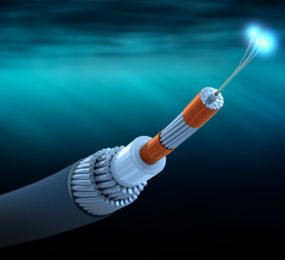
The global energy transition isn't just happening on land anymore. Beneath the ocean waves, a quiet revolution is taking place—one that could reshape how we distribute power across continents. At the heart of this revolution lies an elegant pairing: HVDC transmission technology working seamlessly with submarine power cables to deliver renewable energy like never before.
But why does this combination work so well? And what does it mean for the industry moving forward?
The Perfect Pairing: Why HVDC Transmission Suits Submarine Power Cables
Imagine needing to send electricity across hundreds of kilometers of ocean. The challenge isn't just distance—it's efficiency. Traditional AC systems leak power through reactive losses and electromagnetic effects. HVDC transmission, on the other hand, eliminates these problems.
Here's what makes HVDC transmission exceptional for submarine power cables:
- Direct current transmission operates without the reactive power losses that plague AC systems.
- Submarine power cables require smaller, more efficient conductors when using HVDC.
- Power travels further with minimal losses, even over intercontinental distances.
- Installation footprints shrink, reducing environmental impact during deployment.
For submarine cables stretching beyond 50 kilometers from shore, HVDC transmission becomes not just preferable—it becomes economically essential. The technology's ability to transmit power efficiently over extreme distances is precisely what offshore energy projects demand.
This wasn't always the case. The first HVDC link to Gotland, Sweden, established in 1950, proved the concept worked. Decades later, the technology has matured into something the modern energy sector can't imagine operating without.
The Market is Exploding—And for Good Reason
The numbers reveal quite a story. The global submarine power cables market stood at $14.98 billion in 2024. Experts believe it could climb to $41.20 billion by 2034. This rise has a strong connection to HVDC transmission systems.
The reasons are straightforward. Offshore wind farms are expanding at unprecedented rates across Europe, Asia, and beyond. Countries are building cross-border grid interconnections to strengthen energy security. And everywhere, governments and energy companies are racing to integrate renewable sources into their networks. All of this infrastructure relies on submarine cables.
Europe currently leads adoption, with the region expected to capture $9.0 billion of the market by 2032. But this is a global phenomenon. Supply chain analysts predict that global demand for submarine cables could double by 2030 alone.
Where Submarine Power Cables are Making Real Impact
Real-world projects demonstrate exactly why this pairing matters. The EuroAsia Interconnector linking Israel, Cyprus, and Greece relies on HVDC submarine power cables to carry renewable energy across the Mediterranean. Viking Link, connecting the UK and Denmark, uses submarine cable technology to balance wind power across two nations. In contrast, the Australia–Singapore Power Link demonstrates how HVDC systems could work over very long distances.
These aren't theoretical experiments. They're operational systems serving millions of people and proving that HVDC submarine power cables can handle the demands of modern energy grids. Floating offshore wind platforms are now deploying dynamic submarine cables, pushing the technology into entirely new applications.
Island nations are transforming the way they create and control electricity because of submarine cable systems. This advancement helps them secure their grids while achieving energy independence, something they couldn’t do.
The Technical Reality: Advantages and Trade-Offs
HVDC transmission in submarine power cables offers better voltage stability and cuts reactive power losses far more than AC systems. The cables are designed with sizing that can be more eco-friendly while also making the infrastructure tougher.
But nothing comes without complexity. HVDC technology requires specialized converter equipment and expert engineering teams. Route planning demands thorough subsea surveys. Cable protection systems need careful design. And monitoring long-term thermal performance and aging becomes critical for maintaining reliability across decades of operation.
These hurdles, while tough, are just part of what makes submarine power cable projects both intricate and specialized.
The Future Belongs to Those Who Connect
The submarine cables industry stands at an inflection point. The technology exists. The market demand is real. The projects are operating successfully. What remains is scaling this infrastructure globally and solving the remaining technical and regulatory challenges.
This is where events like Leadvent Group's 5th Annual Submarine Power Cable and Interconnection Forum play a critical role. The forum gathers engineers, industry experts, decision-makers, and innovators to explore topics like cable construction, installation methods, detecting faults, and lowering costs. To advance submarine cable innovation, improve grid connections, or shape the future of renewable energy distribution, this event offers a key chance to get involved.
The connection between HVDC transmission and submarine power cables isn’t random. Engineers designed it, tested it, and prepared it to drive the future of energy systems worldwide.
Frequently Asked Questions (FAQs)
- Why pick HVDC transmission instead of AC for submarine cables?
HVDC reduces reactive losses and moves power over long distances with better efficiency. When submarine cables stretch beyond 50 kilometers, HVDC proves more cost-effective and dependable to operate.
- Why is there such a rapid rise in demand for submarine cables?
The growth comes from three major factors. Offshore renewable energy is expanding, nations are starting new cross-border grid connection projects, and the global shift away from fossil fuels is getting stronger. Each drives demand for submarine power cable infrastructure.
- What makes submarine cable projects so expensive?
Cable manufacturing, installation costs, specialized marine surveys, skilled labor, and the capability to repair systems in remote, deep-sea locations all contribute significantly to submarine cable project budgets.
- How does HVDC transmission help grids stay stable?
HVDC cables allow controlled energy flow, which plays a big part in balancing grid frequency. They also make it easier to connect renewable energy, which can be unpredictable, to the power networks.






Comment