

The HVDC vs HVAC Decision in Offshore Power
One technology decision made early in a project can determine its commercial performance for the next 30 years. Not the route. Not the contractor. The choice between HVDC and HVAC.
Get it right, and you build an asset that performs efficiently across its full life. Get it wrong, and you spend years managing the consequences — higher losses, costly retrofits, and grid connection constraints that were avoidable from day one.
The market reflects how much is at stake. Subsea power transmission reached USD 11.28 billion in 2024 and is on track to hit USD 18.56 billion by 2032. Offshore wind is scaling, interconnectors are multiplying, and project teams face growing pressure to make better, faster decisions. This blog breaks down what drives the HVDC vs HVAC decision and what project owners must get right before critical choices are locked in.
The Core Technical Difference
HVAC (High Voltage Alternating Current) is the onshore grid standard. It is familiar and cost-effective over shorter distances. But subsea cables carry high capacitance, pushing AC systems to generate substantial reactive power. Beyond roughly 50 km, this "leakage" cripples the cable's ability to deliver usable active power.
HVDC (High Voltage Direct Current) carries no reactive power. Every unit of cable capacity transmits real power, regardless of distance. That single physical fact drives the technology decision for long-distance submarine power applications.
When HVAC Is the Right Call
HVAC is the stronger choice when:
- Distance to shore is under 50 km, where reactive losses stay manageable
- Project capacity is modest, making HVDC converter station costs hard to justify
- Synchronous grid integration is needed, since AC feeds directly into existing networks
- Supply chain simplicity matters, as HVAC components carry proven, wide availability
For nearshore offshore wind, HVAC is the right default.
When HVDC Becomes Non-Negotiable
Beyond 70–80 km, HVAC's reactive power limitations rule it out for utility-scale transmission. Two projects illustrate this clearly:
- The 580 km NordLink cable (Germany to Norway) runs on HVDC
- The 1,400 km Xlinks Morocco–UK project built its design around HVDC from day one
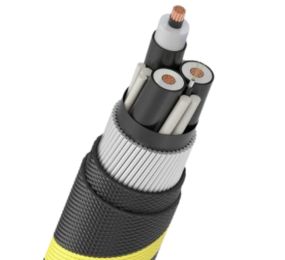
Distance is not the only driver. Modern VSC HVDC systems give operators independent, fast control over active and reactive power. HVDC supports black-start capability, strengthens grid resilience, and links grids at different frequencies. On the cable installation side, a bipolar HVDC system uses two conductors to match a three-phase AC rating, meaning fewer cables and a smaller seabed footprint.
The Economic Crossover: Where the Numbers Tip
No single break-even point applies universally. The crossover depends on:
- Total power capacity, since larger projects close the cost gap faster
- Asset ownership model, as developer and TSO structures price costs differently
- Lifecycle horizon, since HVDC's lower cable losses compound over a 25–30 year asset life
- Applicable incentive and grid connection frameworks
HVDC cable losses run materially below AC equivalents at comparable distances. That efficiency advantage grows with scale and delivers value every year the asset operates.
Operational and Asset Management Realities
Technology choice shapes day-to-day realities across the full asset life. Key factors to plan for:
Maintenance intensity: HVDC converter stations need more intensive, specialised maintenance than HVAC transformers. Build O&M frameworks, spare part strategies, and repair-readiness before commissioning.
Monitoring requirements: Both technologies require distributed temperature sensing, partial discharge monitoring, and cable health programmes. HVDC adds complexity given the consequences of unplanned outages on long corridors.
Repair logistics: Subsea power cable fault repairs are expensive and drive a disproportionate share of offshore wind financial losses. HVDC repair campaigns require specialist vessels and equipment. That contractor pool is narrow.
End-of-life planning: Technology type determines which diagnostic tools are available during decommissioning. HVDC assessments follow different methodologies from AC equivalents.
The Decision Framework
The core drivers are consistent across projects. Distance is the first filter. HVAC suits projects within 50 km. Beyond 70–80 km, HVDC is the only practical choice. Smaller projects struggle to absorb HVDC converter costs. Utility-scale transmission offsets them through cable savings and lower losses.
Grid integration adds another layer:
- Synchronous AC connection points toward HVAC
- Asynchronous or frequency-independent links point toward HVDC
- Converter costs are outweighed by efficiency gains at scale over a long asset life
Engage with this decision before routing, procurement, and grid connection terms are locked in. Reversing assumptions later carries a high cost.
Join the Industry Conversation in Amsterdam
These discussions are on the agenda at Leadvent Group's 6th Annual Subsea Cable Installation, Asset Management & Reliability Forum, on 29–30 April 2026 at the Steigenberger Airport Hotel, Amsterdam.
Now in its sixth year, the forum connects project owners, TSOs, cable manufacturers, and technology providers to share experience across the full cable lifecycle. The 2026 edition features:
- 35+ expert speakers across subsea cable disciplines
- 150+ industry peers, including developers, regulators, contractors, and OEMs
- Agenda tracks covering route optimisation, burial, monitoring, fault management, and life extension
Frequently Asked Questions
1. Why can't HVAC use reactive power compensation to extend its subsea range?
Offshore reactive compensation does extend HVAC's range but adds significant platform cost. Beyond roughly 80 km, the volume of compensation needed wipes out HVAC's cost advantage. HVDC becomes the more economical route.
2. Does HVDC carry specific installation risks that HVAC does not?
Yes. HVDC cables need more controlled handling due to sensitivity to bending and thermal cycles. Vessels and procedures require HVDC-specific qualifications, and the qualified contractor pool is smaller than in the HVAC market.
3. How does technology choice affect future repurposing or upgrades?
HVAC cables are re-rated within existing AC frameworks with modest converter changes. HVDC ties more tightly to original converter specifications. Increasing capacity typically requires significant changes to both the converters and the cable. Future-proofing at the design stage matters more for DC systems.
4. What are the typical procurement lead time differences?
HVDC procurement for major systems runs 3–5 years. HVAC equivalents take 1–3 years. With manufacturing capacity under pressure from offshore wind demand, project owners should open HVDC procurement conversations earlier than expected.






Comment