

Industrial E-Fuels Demand and Offtake: Powering the Next Phase of Decarbonisation
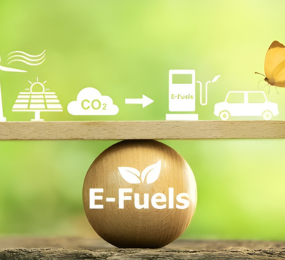
As industries around the world intensify efforts to reduce carbon emissions, e-fuels are emerging as a critical solution for sectors that are difficult to electrify. Produced using renewable electricity, green hydrogen, and captured carbon dioxide or nitrogen, e-fuels offer a low-carbon alternative to conventional fossil fuels for applications such as aviation, shipping, chemicals, steel, and heavy manufacturing.
However, scaling the e-fuels industry depends on more than technology alone. Two factors are becoming especially important: industrial demand and offtake agreements. Together, they are shaping investment decisions, accelerating project development, and helping build confidence in the future of synthetic fuels.
The Growing Industrial Demand for E-Fuels
Heavy industry remains one of the largest sources of global greenhouse gas emissions. Sectors such as steel, cement, chemicals, refining, aviation, and maritime transport require high-temperature heat, energy-dense fuels, or feedstocks that are difficult to replace with electricity alone. E-fuels provide a practical pathway for reducing emissions while allowing industries to maintain operational continuity.
The aviation sector is one of the strongest drivers of demand. Airlines and airport operators are under increasing pressure to reduce lifecycle emissions, and Sustainable Aviation Fuel (SAF), including e-kerosene, is viewed as a key solution for long-haul flights. Similarly, the shipping industry is exploring e-methanol and e-ammonia as alternatives to traditional marine fuels in response to stricter international emissions regulations.
Chemical manufacturers are also showing growing interest in e-fuels and green hydrogen as low-carbon feedstocks for ammonia, methanol, and other industrial products. Meanwhile, steel producers are evaluating hydrogen-based processes to reduce reliance on coal in ironmaking.
This broadening demand base is creating momentum across the industrial landscape. Companies are increasingly incorporating e-fuels into their decarbonization roadmaps, signaling that synthetic fuels could become a major component of the future energy mix.
Why Offtake Agreements Matter
While demand is growing, e-fuel production projects are capital-intensive and require long-term financial certainty. This is where offtake agreements become essential.
An offtake agreement is a long-term contract in which a buyer commits to purchasing a specific volume of fuel over an agreed period. These agreements provide revenue visibility for project developers and help secure financing from banks and investors. In many cases, lenders require signed offtake contracts before approving funding for large-scale e-fuel projects.
For buyers, offtake agreements offer supply security in a market where future availability of low-carbon fuels may become constrained. Companies can lock in access to sustainable fuels early, supporting both compliance obligations and corporate sustainability targets.
The structure of these agreements varies depending on the industry and project. Some contracts involve fixed volumes and pricing mechanisms, while others include flexible terms linked to market conditions or emissions performance. Regardless of the structure, the underlying goal is the same: reducing uncertainty for both producers and buyers.
Building a Bankable E-Fuels Market
The combination of industrial demand and firm offtake commitments is helping transform e-fuels from a promising concept into a bankable industry. Developers are more likely to move forward with multi-billion-dollar projects when they can demonstrate committed customers and predictable revenue streams.
This dynamic is already visible in aviation and shipping, where major airlines and maritime companies are signing long-term agreements with fuel producers to secure future supplies of sustainable fuels. These commitments send a strong signal to investors and help accelerate infrastructure development, including renewable power generation, hydrogen production, carbon capture, storage, and fuel distribution networks.
Governments are also playing a role by introducing SAF mandates, carbon pricing mechanisms, and industrial decarbonization policies that encourage demand for low-carbon fuels. Policy certainty further strengthens the case for long-term investment.
Challenges and the Road Ahead
Despite the positive momentum, challenges remain. E-fuel production costs are still higher than those of conventional fossil fuels, and large-scale renewable energy capacity is needed to support future demand. Infrastructure for storage, transport, and bunkering must also expand rapidly.
However, costs are expected to decline as technology improves and production scales increase. As more industries commit to net-zero targets, demand for e-fuels is likely to grow substantially over the next decade.
The success of the e-fuels market will depend on continued collaboration between industrial buyers, fuel producers, investors, technology providers, and policymakers. Long-term partnerships and offtake agreements will remain central to building a stable and scalable low-carbon fuel ecosystem.
Takeaway Point:
Rising industrial demand and long-term offtake agreements are becoming the foundation of the e-fuels industry, providing the market certainty needed to accelerate investment, scale production, and support global decarbonization efforts.










Comment