

The Undersea Engineering Floating Wind Depends On
Offshore wind has a visibility problem — but not the kind turbine opponents complain about. The real issue is what nobody sees: the systems buried beneath the surface, holding everything in place.
Anchoring and mooring infrastructure is unglamorous, rarely photographed, and almost never discussed in mainstream energy coverage. It also determines whether a floating wind farm generates power for 25 years or breaks free in a storm.
The engineering happening beneath the waterline is where the commercial future of offshore wind is genuinely being decided.
Why O&G Anchoring Does Not Work at Wind Scale
Deep-water offshore environments are unforgiving. Strong currents, cyclonic winds, irregular wave frequencies, and shifting seabed conditions all exert simultaneous dynamic loads on a floating structure.
Traditional mooring systems were borrowed from oil and gas — built for very different economics. An O&G platform needs 12 to 20 anchors. Nobody flinched at the cost. But Floating Wind Turbines operate at a different scale entirely. Researchers estimate roughly 40,000 anchors will be needed to support approximately 13,500 turbines by 2050. The O&G arithmetic breaks down at that volume.
Mooring systems can account for up to 10% of total capital cost on a floating offshore wind farm. That figure climbs further in challenging water depths or difficult seabed geologies.
Three Mooring Configurations in Use Today
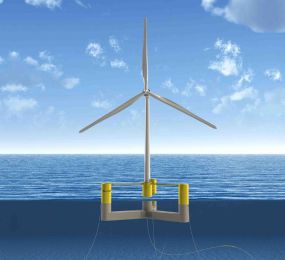
The industry has converged on three main mooring geometries, each suited to different site conditions.
Catenary mooring is the most established:
- Lines drape in a natural curve from platform to seabed
- Compliance comes from the weight of the line itself
- The trade-off is footprint — substantial seabed area per turbine complicates farm layouts, cable routing, and seabed ecology
Taut-leg mooring takes a different approach:
- Lines run almost vertically under high tension, cutting horizontal excursion
- Seabed footprint shrinks significantly
- Taut systems need sophisticated anchors — drag-embedded types cannot resist the vertical pullout forces involved
Semi-taut systems sit between the two:
- Partially tensioned synthetic fibre ropes reduce seabed contact while retaining flexibility
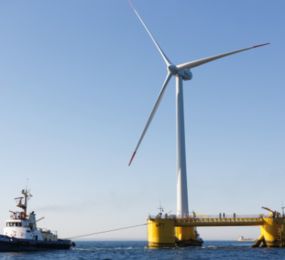
- The WindFloat Atlantic project off Portugal validated this at depths beyond 200 metres
The newest development is shared mooring, where platforms within a farm share infrastructure rather than each holding independent lines and anchors. The COREWIND project demonstrated that shared configurations can reduce total anchor count and material requirements across a farm. The cost case is compelling.
Anchor Innovation Is Moving Fast
The industry has relied on three anchor types:
- Drag-embedded anchors — simple to install, well-suited to catenary systems
- Suction anchors — embed into soft sediment using differential pressure; fast to install, practical at intermediate depths
- Vertical load anchors — built for the high-tension demands of taut-leg applications
Texas A&M University's Deeply Embedded Ring Anchor (DERA), published in Geotechnical Frontiers 2025, was designed from scratch for floating wind. Not adapted from O&G — purpose-built for the volume and cost constraints of renewable deployment.
In May 2026, China installed the world's largest single-unit 16-megawatt floating turbine. It introduced a mooring architecture combining dynamic monitoring systems, active ballast management, polyester fibre cables, and anchor chains. A working proof of concept at full commercial scale.
The Offshore Cable Challenge
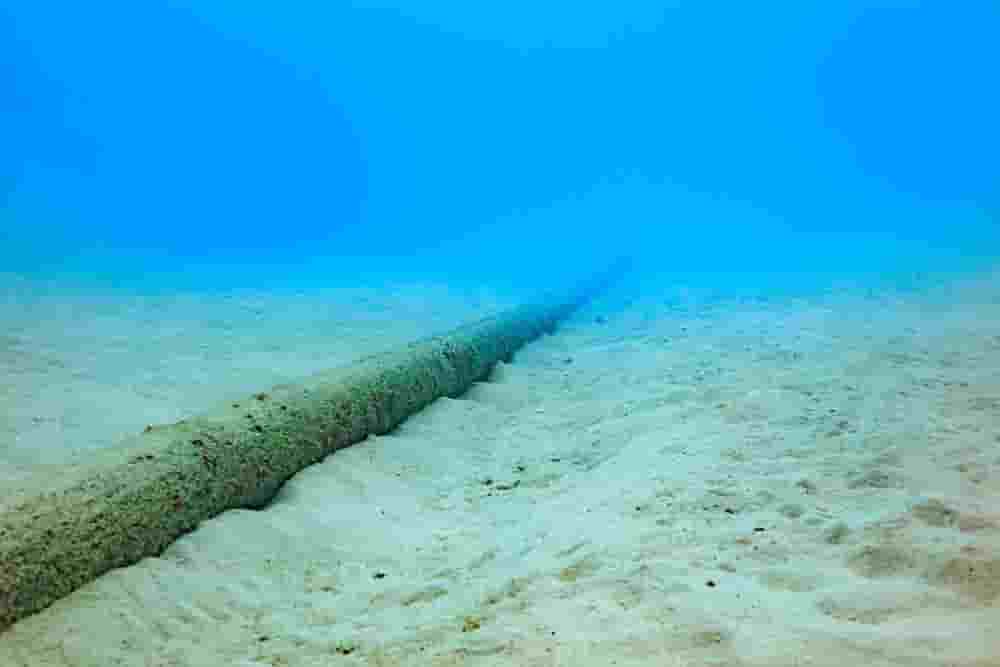
A floating platform moves. Even well-engineered mooring allows dynamic motion — it has to, for structural compliance. This creates a direct problem for the offshore cable connecting the turbine to the grid.
That cable cannot be static. It must:
- Flex continuously with platform movement
- Survive millions of fatigue cycles over a 25-year design life
- Perform reliably in seawater at depth
Cable terminations, bend stiffeners, and routing configurations that keep cables clear of mooring lines are all active R&D areas. Getting this wrong does not just knock out one turbine. It disconnects entire floating arrays from the grid.
When Scale Becomes a Commercial Problem
The global floating offshore wind energy pipeline targets 16 GW by 2030 and 48 GW by 2035. At three anchors per turbine, tens of thousands of anchors need designing, manufacturing, and monitoring across diverse seabed conditions and regulatory frameworks.
Shared mooring is not just elegant engineering at this scale. It is a commercial necessity. The industry is moving toward:
- Standardised, modular anchor designs
- Real-time tension monitoring
- Predictive maintenance and digital twin integration
The mooring system is becoming a data system as much as a structural one.
Where Floating Wind's Next Decisions Get Made
Leadvent Group's 6th Annual Floating Wind Europe takes place on 23–24 June 2026 at the Radisson Blu Hotel, London Heathrow. The event brings together 150+ pre-qualified professionals for two days of case studies, panel discussions, and roundtables.
Key sessions directly relevant to this topic:
- Next-Generation Mooring and Anchor Systems for Floating Wind Turbines
- Dynamic Power Cables for Commercial-Scale Floating Wind
The event draws senior professionals across the value chain:
- Mooring engineers and naval architects
- Project developers and EPC contractors
- Offshore wind financiers and risk assessors
- Policy teams shaping commercial deployment frameworks
These decisions do not get made in papers. They get made in rooms like this.
Secure your place at the 6th Annual Floating Wind Europe — where industry leaders meet, strategies align, and the real work of building the future of floating wind gets done. Spaces are limited, and they fill fast. Register today.
Frequently Asked Questions
- What is the difference between catenary and taut-leg mooring systems?
Catenary mooring relies on chain weight for compliance — as loads increase, more chain lifts off the seabed. It requires a large seabed footprint. Taut-leg mooring uses tensioned lines at steep angles, reducing horizontal movement and seabed area, but demands anchors capable of resisting vertical pullout forces. The right choice depends on water depth, seabed conditions, and platform type.
- Why can't floating wind use oil and gas anchoring systems?
O&G platforms are individual high-value assets where anchor cost is a small fraction of expenditure. Floating wind needs anchors at industrial scale — around 40,000 globally by 2050. At that volume, O&G-derived economics do not hold. The industry needs purpose-designed anchors that are cost-effective, fast to install, and suited to varied seabed conditions.
- What are shared mooring systems and why do they matter?
Multiple floating turbines share mooring lines or anchors rather than each holding an independent set. This reduces total anchor count, lowers installation costs, and simplifies seabed footprint management. The COREWIND programme demonstrated meaningful cost reduction potential, though shared systems require sophisticated modelling to manage inter-platform load distribution.
- Who are the key organisations represented at the 6th Annual Floating Wind Europe?
Past and current participants include DNV, Equinor, Ramboll, Aker Solutions, Carbon Trust, IRENA, ABN AMRO, and Celtic Sea Power, among others. The event draws a mix of developers, financiers, engineers, and policymakers — all actively working on floating wind commercialisation.






Comment