

Why Submarine Power Cable Faults Are More Costly Than You Think
Most offshore wind failures never make the news. The turbines keep spinning. The platform stays standing. But somewhere on the seabed, a cable gives way — and within hours, an entire wind farm goes dark. No visible damage. No easy access. Just an outage that could last 62 days and cost millions before a repair vessel even reaches the site.
Subsea cable faults are the energy sector's most expensive quiet problem. They happen roughly 200 times a year, account for over 40% of offshore wind insurance claims, and the repair process has barely changed in nearly a century. What has changed is the scale of what depends on these cables. This blog examines what makes undersea cable repair so costly, so slow, and so critical to get right.
Why Cable Faults Happen More Than You Think
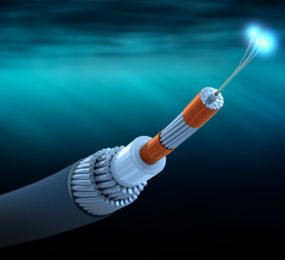
Submarine power cable infrastructure sits in one of the harshest environments on earth. The seabed faces constant threat:
- Fishing trawlers and anchor strikes — responsible for roughly 86% of all global subsea cable faults
- Manufacturing defects — nearly 40% of known export cable failures trace back to production flaws
- Installation errors — latent damage introduced during laying often surfaces only during operation
- Thermal and mechanical stress — especially relevant in deeper, higher-voltage systems
Approximately 200 cable faults occur globally each year. That figure held steady even as total cable route mileage grew by 50% over the past decade. More cables, same fault rate — far higher stakes per incident.
The Real Cost: Not Just the Repair Bill
When an offshore wind export cable fails, the direct repair cost is significant. The financial damage, though, runs deeper. In the offshore wind sector:
- More than 40% of construction period insurance claims relate to cables
- Total losses from cable claims have exceeded 350 million euros since 2010
- The average outage per incident runs to around 100 days
- Export cable faults average 62 days offline
A cable is typically the single point of failure connecting a wind farm to the grid. No cable, no revenue. For large offshore projects, 60-plus days of zero export is a serious financial event.
The turbines suffer too. Without power flowing through the cable, onboard heaters and dehumidifiers lose supply. Marine air accelerates corrosion in turbine nacelles. A fault that looks contained on day one can trigger secondary damage across the array by week eight.
Why Repairs Take So Long
Speed is not the natural state of subsea cable repair. The process is multi-step, vessel-dependent, and sensitive to conditions no one controls. A typical repair runs as follows:
- Fault location — an ROV maps the exact damage point. Visible anchor strikes are straightforward. Buried faults in complex electrical environments take considerably longer.
- Cut and seal — the cable is cut either side of the fault and sealed to stop water ingress.
- Deburial — a mass flow excavation vessel uncovers the section before lifting begins.
- Vessel mobilization — a specialist cable-laying vessel is sourced, equipped, and sailed to site. This step alone can add weeks.
- Jointing and reburial — the replacement section is spliced in, tested, and reburied.
Each step is weather-sensitive. The global fleet of purpose-built repair vessels is small. Without a pre-arranged contract, operators compete for vessel time in an already constrained market.
The Baltic Cable HVDC link between Germany and Sweden makes the point clearly. Its operator resolved a fault in 29 days — only because a pre-negotiated agreement, pre-positioned spare cable, and a dedicated vessel were already in place. Without that groundwork, the same repair would have taken three months or more.
Offshore Grid Transmission: Higher Stakes, Higher Exposure
Offshore Grid Transmission assets carry power across longer distances and at higher voltages. When these cables fail, the impact extends beyond a single wind farm:
- Grid operators must reroute or curtail power across a region
- Balancing costs rise across the interconnected system
Permitting adds another layer. In territorial or politically sensitive waters, repair vessels require government approvals before work can begin. When five undersea cables connecting Vietnam failed simultaneously, full restoration took nearly eight months. Permitting delays drove most of that timeline, not technical complexity.
Where the Industry Is Heading
Progress is happening across several fronts:
- In-situ repair technology — fixing cables on the seabed rather than raising them could cut average repair costs significantly and widen the range of suitable vessels
- Distributed fibre-optic sensing — real-time monitoring along the full route enables faster fault detection, sometimes catching issues before a break occurs
- Pre-positioned spare cable stocks — strategically placed inventory shortens mobilization time when a fault does occur
Operators who invest in repair readiness consistently show shorter outage times and lower total incident costs.
Shape the Future of Subsea Cable Infrastructure in London
The 6th Annual Submarine Power Cable and Interconnection Forum takes place on 18–19 November 2026 in London as a hybrid event. Organized by Leadvent Group, this forum brings together 150+ senior professionals from across the subsea cable sector.
The forum is ideal for professionals working in:
- Subsea cable operations and offshore wind development
- Electricity interconnection planning and TSO strategy
- Grid engineering, cable manufacturing, and energy regulation
- Marine engineering and subsea asset management
Two focused days of technical sessions, live case studies, and peer exchange. O&M directors, cable project managers, heads of interconnection, and decision-makers from leading developers and TSOs will all be in the room.
Do not miss your chance to be part of the conversation driving this sector forward. Register now for the 6th Annual Submarine Power Cable and Interconnection Forum and spend two days solving the industry's most pressing challenges alongside the people who matter most.
FAQs
- What are the most common causes of submarine power cable faults?
Fishing trawler activity and anchor strikes cause roughly 86% of all global subsea cable incidents. Other contributing factors include manufacturing defects, installation errors, seabed movement, and in rare cases, deliberate damage.
- How long does a submarine power cable repair typically take?
With a pre-mobilised vessel and pre-positioned spare cable, operators have completed repairs in under 30 days. Without that preparation, the process often runs four to six weeks and can extend to several months when weather or permitting creates delays.
- Why does a cable fault cost so much more than the repair itself?
The cable is usually the single point of failure for the entire wind farm or interconnector. No power flows during the outage. Average downtime for an export cable failure exceeds 60 days. Lost generation revenue across that period often outweighs the direct repair bill by a significant margin.
- What steps reduce repair timelines in practice?
Pre-negotiated repair contracts, pre-positioned spare cable stocks, and continuous cable health monitoring are the most proven interventions. Real-time fibre-optic sensing along the route allows earlier detection. Catching a developing fault before it becomes a full break changes the entire scale of the repair.






Comment