

Supply Chain: The Backbone of Global Business
Behind every product on a store shelf or delivered to a doorstep lies a complex supply chain. It is a coordinated network of suppliers, manufacturers, logistics providers, warehouses, distributors, and retailers working together to move goods efficiently from source to customer. While often operating in the background, supply chains are fundamental to economic stability and business performance.
In recent years, supply chain management has shifted from a cost-focused function to a strategic priority. Disruptions caused by global health crises, geopolitical tensions, natural disasters, and shifting trade policies exposed vulnerabilities in highly optimized, lean systems. Organizations that once prioritized just-in-time inventory models began reassessing their approach to risk and resilience.
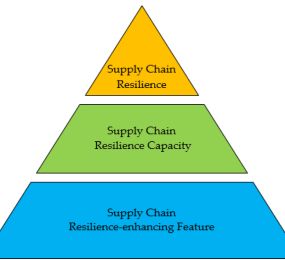
Resilience now sits at the center of supply chain planning. Companies are diversifying supplier bases, nearshoring production where feasible, and building strategic inventory buffers for critical components. The objective is not to eliminate risk an impossible task, but to ensure continuity in the face of uncertainty.
Digital transformation is playing a pivotal role in this evolution. Advanced analytics, cloud-based platforms, and real-time tracking systems provide visibility across the supply chain. Businesses can now monitor shipments, anticipate delays, and respond quickly to changes in demand. Data-driven forecasting improves inventory management and reduces excess stock, balancing efficiency with preparedness.
Automation is also reshaping operations. Robotics in warehouses, automated sorting systems, and intelligent transportation management tools streamline processes and reduce manual errors. These technologies improve speed and accuracy while supporting scalability during peak demand periods.
Sustainability has become another defining element. Customers, investors, and regulators increasingly expect transparency regarding sourcing practices, carbon emissions, and ethical labor standards. Companies are evaluating supplier performance not only on cost and quality, but also on environmental and social responsibility. Sustainable sourcing and optimized logistics routes can lower emissions while strengthening brand credibility.
Collaboration across the supply chain ecosystem has gained importance. Strong partnerships with suppliers and logistics providers enhance information sharing and joint problem-solving. Long-term relationships often yield greater flexibility during disruptions compared to purely transactional arrangements.
At the same time, cost management remains a core objective. Rising fuel prices, labor shortages, and transportation constraints continue to pressure margins. Effective supply chain leaders balance cost discipline with investment in technology and contingency planning.
Supply chain management is no longer confined to operational teams. It influences corporate strategy, financial performance, and customer satisfaction. Boards and executive leaders now recognize that supply chain strength can determine competitive advantage in volatile markets.
In a globally connected economy, the ability to source, produce, and deliver goods reliably is critical. Organizations that build agile, transparent, and resilient supply chains are better equipped to navigate uncertainty while meeting evolving market demands.
Key Takeaway
A resilient and digitally enabled supply chain is essential for managing risk, maintaining continuity, and sustaining long-term business competitiveness.
For more information and group participation, contact us: [email protected]
Leadvent Group - Industry Leading Events for Business Leaders!
www.leadventgrp.com | [email protected]













Comment