

The Manufacturer's Guide to Supply Chain Digitalization
Most manufacturers today have more data than ever before. Yet disruptions still catch them off guard, supplier risks surface too late, and decisions still rely on spreadsheets that are outdated the moment they are saved.
The gap is not a lack of information. It is a lack of connection.
Supply chain digitalization is the process of embedding digital technologies across every layer of the supply chain, so that data moves in real time, decisions get smarter, and the entire network becomes visible and resilient. This guide breaks down what that means in practice, and why getting it right has never been more urgent.
What Digitalization Actually Means (and What It Does Not)
Installing software is not digitalization. Scanning barcodes is not digitalization. True digitalization happens when data flows freely across the entire value chain, from Tier-3 supplier to end customer, and actively shapes decisions. For manufacturers, this means:
- AI-driven demand planning that adjusts before a shortfall occurs
- Procurement platforms that flag supplier financial health early
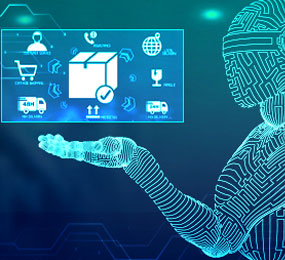
- Digital twins that simulate disruptions before they become crises
- Sensor networks that track assets and delays in real time
According to the Council of Supply Chain Management Professionals, 93% of companies are actively digitalising their supply chains. The question is no longer whether to digitalize. It is how to do it in a way that delivers lasting value.
The Core Technologies Driving the Shift
Real-Time Visibility Platforms
Visibility platforms bring data from suppliers, logistics partners, and warehouses into one operational view. Companies using these tools report cost reductions of 5 to 35% and service improvements of up to 17%.
AI and Predictive Analytics
By 2026, 70% of companies report advanced AI adoption in their supply chains. For manufacturers, AI means inventory levels that self-correct, demand signals that anticipate market swings, and procurement alerts that surface before disruption hits.
Digital Twins
A digital twin is a live virtual replica of a physical supply chain. It lets teams run what-if scenarios without real-world consequences, turning reactive decisions into rehearsed responses.
IoT and Sensor Networks
Connected sensors on the factory floor, in transit containers, and across warehouses feed continuous data upstream. Temperature shifts, machine wear, and route delays are all captured and made actionable automatically.
Blockchain for Traceability
By 2025, over 65,000 smart contracts were in active use across logistics and manufacturing. For manufacturers in pharmaceuticals, food, and automotive, blockchain delivers the traceability that regulators and customers now require.
The Risk That Comes With Digitalization
Every new digital connection creates a new vulnerability. Every supplier portal, API integration, and connected device is a potential entry point for threat actors. This is why cyber supply chain risk management has moved from an IT concern to a boardroom priority.
Forward-thinking organisations in 2026 are building Zero Trust security architectures into their supply chain infrastructure from day one. The principle is clear: a supply chain is only as secure as its weakest digital link. Cybersecurity cannot come after digitalization is complete. It must be built alongside it.
Digitalization as a Sustainability Driver
There is a direct link between digital transformation and Supply Chain Sustainability. Manufacturers cannot reduce emissions they are not tracking, and they cannot improve supplier ethics they cannot see. Digitalization closes that gap. It enables:
- Real-time tracking of Scope 3 emissions across the supply network
- Automated supplier ESG compliance assessments at scale
- Sourcing decisions that factor in carbon impact alongside cost and risk
A 2025 MIT report found that 85% of corporations planned to maintain or increase sustainability efforts. Digitalization is how those commitments produce measurable outcomes rather than pledges.
A Practical Starting Point
For manufacturers beginning this journey, sequence matters as much as technology:
- Map before you digitalise. Understand current structure, data workflows, and pain points before choosing tools.
- Start with visibility. Real-time network visibility delivers immediate ROI and builds the data foundation everything else depends on.
- Layer in intelligence. Clean, connected data makes AI and analytics generate meaningful predictions.
- Harden security in parallel. Digitalisation and cybersecurity are simultaneous workstreams, not a sequence.
- Build for resilience. Agile, modular supply networks outperform lean ones when disruption arrives.
Take the Next Step at Europe's Leading Supply Chain Forum
Theory only goes so far. Hearing directly from practitioners at Maersk, Danone, SAP, Vestas, and Procter & Gamble is where strategy sharpens.
Leadvent Group is a leading global B2B events organiser connecting senior decision-makers across industries. The 3rd Annual Supply Chain Risk and Resilience Forum takes place on 10 and 11 June 2026 at the Steigenberger Airport Hotel in Amsterdam, Netherlands. This supply chain conference brings together 35+ expert speakers and 150+ senior peers from organisations including SAP, Moody's Corporation, KION Group, and the University of Warwick.
The forum is built for:
- Supply chain directors and heads of procurement
- Risk, resilience, and business continuity managers
- C-suite executives leading supply chain transformation
If you are serious about building a supply chain that can withstand what comes next, your seat is already waiting. Register for the 3rd Annual Supply Chain Risk and Resilience Forum before capacity fills and secure your place among the leaders shaping the future of resilient manufacturing.
Frequently Asked Questions
- What is the difference between supply chain digitization and supply chain digitalization?
Digitization converts analog information into a digital format. Digitalization goes further. It means redesigning processes and decisions around that data. Manufacturers who only digitize get tidier records. Those who digitalize build competitive resilience.
- How long does it take for manufacturers to see ROI from digitalization?
Most manufacturers see measurable returns within 12 to 18 months of implementing visibility tools. Gains show up first in inventory accuracy and logistics cost reduction. Broader transformations involving AI and digital twins produce compounding returns over two to three years.
- Is supply chain digitalization only relevant for large enterprises?
Not at all. Mid-size manufacturers are among the fastest adopters. They are more agile in implementation and often carry greater exposure from single-supplier dependencies. Cloud-based and modular platforms have made digitalization viable at nearly every scale.
- Who should attend the 3rd Annual Supply Chain Risk and Resilience Forum?
The forum is designed for supply chain directors, procurement heads, risk managers, resilience leaders, and C-suite executives across industries. Whether you are early in your digitalization journey or benchmarking an existing programme, the forum offers direct access to practitioners, peer exchange, and strategies you can apply immediately.







Comment