

why-supply-chain-decarbonization-has-become-a-boardroom-priority-in-2026
For years, sustainability initiatives within supply chains were largely driven by compliance requirements and corporate social responsibility commitments. Procurement teams focused on supplier audits, environmental reporting, and meeting customer expectations, while executive leadership concentrated on financial performance and business growth.
Today, that landscape has changed.
In 2026, supply chain decarbonization has become a boardroom agenda. It is no longer viewed as an environmental initiative but as a strategic business priority that influences profitability, resilience, investor confidence, regulatory compliance, and long-term competitiveness.
Organizations across manufacturing, automotive, energy, logistics, consumer goods, pharmaceuticals, and technology are recognizing that reducing carbon emissions across their value chains is essential for sustainable growth. With Scope 3 emissions often accounting for more than 70% of a company's total greenhouse gas emissions, businesses can no longer achieve meaningful climate goals by focusing solely on their own operations.
The conversation has shifted from "Should we decarbonize?" to "How quickly can we transform our supply chains while maintaining operational efficiency?"
Why Supply Chain Decarbonization Matters More Than Ever
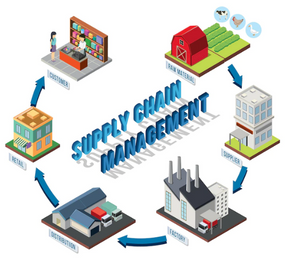
Global supply chains have become increasingly complex. Products often travel through multiple countries before reaching customers, involving numerous suppliers, transportation providers, manufacturers, warehouses, and distributors.
Every stage contributes to carbon emissions.
From raw material extraction and manufacturing to transportation, packaging, and product disposal, supply chains have become one of the largest contributors to corporate environmental impact.
For executives, this presents both a challenge and an opportunity.
Businesses that successfully reduce emissions throughout their value chains are better positioned to improve efficiency, reduce operational costs, strengthen customer relationships, and remain competitive in markets where sustainability is becoming a purchasing requirement.
Scope 3 Emissions Have Changed the Conversation
One of the primary reasons supply chain decarbonization has reached boardroom discussions is the growing emphasis on Scope 3 emissions.
Unlike direct operational emissions, Scope 3 emissions originate from activities that companies do not directly control, including suppliers, logistics providers, business travel, product use, and end-of-life disposal.
Historically, these emissions were difficult to measure accurately.
Today, advances in digital reporting tools, emissions accounting software, and supplier collaboration platforms have made it possible to gain greater visibility across entire value chains.
Boards increasingly understand that reducing operational emissions alone represents only part of the solution. Real progress depends on engaging suppliers and addressing emissions throughout the product lifecycle.
Regulation Is Driving Greater Accountability
Governments and regulators are placing greater emphasis on climate disclosures and environmental transparency.
Across Europe and other major markets, companies are expected to provide more comprehensive reporting on greenhouse gas emissions, supplier performance, and climate-related risks.
Rather than treating sustainability reporting as an annual exercise, organizations are embedding environmental performance into business planning, procurement decisions, and enterprise risk management.
For board members, this means supply chain sustainability is no longer simply a compliance issue—it is a governance responsibility.
Failure to understand environmental risks within the supply chain can expose organizations to regulatory penalties, operational disruption, reputational damage, and increased financial risk.
Investors Are Looking Beyond Financial Performance
Investment decisions are increasingly influenced by environmental performance.
Institutional investors, lenders, and shareholders are assessing whether organizations have credible transition plans capable of delivering long-term resilience in a lower-carbon economy.
Companies that demonstrate measurable progress in reducing supply chain emissions are often viewed as being better prepared for future regulatory changes, carbon pricing mechanisms, and market expectations.
As a result, many boards now receive regular updates on sustainability performance alongside traditional financial reports.
Environmental performance has become an indicator of business resilience rather than simply corporate responsibility.
Customers Are Raising Expectations
Sustainability has become an important purchasing consideration across both consumer and business markets.
Large organizations increasingly require suppliers to provide carbon data during procurement processes, while consumers are demanding greater transparency regarding product origins, manufacturing practices, and environmental impact.
Companies unable to demonstrate credible sustainability strategies may find themselves excluded from supply chains or overlooked during contract evaluations.
For businesses seeking to maintain market access and customer confidence, decarbonization has become an important competitive differentiator.
Technology Is Accelerating Progress
Technology has transformed how organizations measure, monitor, and reduce emissions across complex supply chains.
Artificial intelligence, predictive analytics, digital twins, Internet of Things (IoT) sensors, satellite monitoring, and advanced emissions management platforms are enabling companies to make more informed decisions than ever before.
These technologies allow businesses to:
· Monitor supplier emissions more accurately.
· Identify high-carbon activities across operations.
· Optimise logistics routes.
· Improve energy efficiency.
· Reduce waste.
· Track sustainability performance in real time.
Better data enables better decisions, making decarbonization both measurable and actionable.
The Business Case Has Never Been Stronger
Although sustainability initiatives often require investment, many organizations are discovering that decarbonization also creates measurable business value.
Benefits include:
· Reduced operating costs through energy efficiency.
· Improved supply chain resilience.
· Lower exposure to carbon-related financial risks.
· Stronger investor confidence.
· Enhanced corporate reputation.
· Greater access to sustainable finance.
· Improved customer loyalty.
Rather than viewing sustainability as an expense, organizations increasingly recognise it as an investment in future competitiveness.
Looking Ahead
Supply chain decarbonization will continue to shape business strategy over the coming decade.
Emerging technologies, evolving regulations, changing customer expectations, and increasing investor scrutiny will require organizations to strengthen collaboration across their value chains.
Businesses that begin this journey early will be better positioned to adapt, innovate, and remain competitive in an increasingly low-carbon economy.
Success will not be measured solely by emissions reductions but by the ability to build supply chains that are resilient, transparent, efficient, and prepared for the future.
Join the Conversation
The transition to low-carbon supply chains requires collaboration, innovation, and shared learning.
The Supply Chain Sustainability and Decarbonization Forum brings together supply chain leaders, sustainability executives, procurement professionals, manufacturers, logistics providers, policymakers, and technology innovators to explore practical solutions for building resilient and sustainable value chains.
Join industry experts as they examine emerging regulations, digital technologies, supplier engagement strategies, ESG integration, carbon reporting, and the future of sustainable supply chain management.
Whether your organisation is just beginning its decarbonization journey or accelerating existing initiatives, the forum provides valuable insights, real-world case studies, and networking opportunities to support meaningful progress.
Be part of the conversation shaping the future of sustainable supply chains.
Visit our website to know more: https://www.leadventgrp.com/events/supplychain-sustainability-and-decarbonization-forum/details
For more information and group participation, contact us: [email protected]
Leadvent Group - Industry Leading Events for Business Leaders!













Comment