Day-by-Day

Agenda

Programme

Explore Our Agenda

Opening Remark
08:30AM — 08:55AM

Connected Risks, Collected Defense: Information Sharing and Cross-Sector Interdependencies

  • Aurelio Blanquet, Secretary General, EE-ISAC
Speaker
Aurelio Blanquet
Aurelio Blanquet

Secretary General, EE-ISAC
Panel Discussion
08:55AM — 09:35AM

The Global Threat Landscape. Energy and Utilities are a Critical Strategic Target


  • Geopolitical context of cyber threats. Approaching and navigating geopolitical risks.
  • Incident detection and reporting obligations. Looking at the intersection of NIS2 and the Cyber Resilience Act.
  • Threat differentiation. How can operators distinguish between routine criminal activity and strategic preparation for physical disruption?
  • Impact escalation. From data theft to operational paralysis. The cost of data breach vs. the cost of physical equipment damage.
  • Regulatory evolution. Moving from the ‘point-in-time’ audits to continuous compliance.
  • Incident response. The state of current incident response models.
  •  AI security. The necessity of deploying defensive AI to fight offensive AI.
  • Supply chain fragility. Enforcing security standards on vendors. We talk a lot about enforcing standards on vendors. But how much of supply chain security actually comes down to the people on the other end, and their awareness?
  • Cyber hygiene. What does it actually take to build a culture of cyber hygiene in a critical infrastructure organization, and how do you measure whether it's working?
  • Culture vs. Tools. When an incident hits, how much of the outcome comes down to culture — people feeling safe to report early, knowing who owns what — rather than the tools themselves?

Moderator

Caroline Naumann / Vattenfall

Panellists

Ryan Davidson / Subject Matter Expert for Grid Digitalization and Cybersecurity

Sara Trolle / Svenska kraftnät

Arslan Brömme / Independent Consultant

Mohit Sethi / Kamstrup / ENISA

Dusan Vignjevic / Siemens Energy

Andrew Moodycliffe / Drax Group

Dr. Arsim Bytyqi / DSO Entity
Case Study
09:35AM — 10:00AM

Integrating Technical Response into Strategic Crisis Management

  • In today’s hyper-connected world and business environments – crisis response can not be a siloed affair.
  • A small IT/OT vulnerability can suddenly explode into a multinational operational, regulatory, financial and public relations crisis that must be handled holistically.
  • Energy companies can no longer address the impact areas separately. The teams working with each element of that crisis response – from the deepest technicians to the C-Suite – need to be aligned and have clear information sharing in place.
  • Walking through how one end-to-end energy provider is approaching strategic crisis management and (attempting to) integrate all the moving cogs into a cohesive machine
Speaker
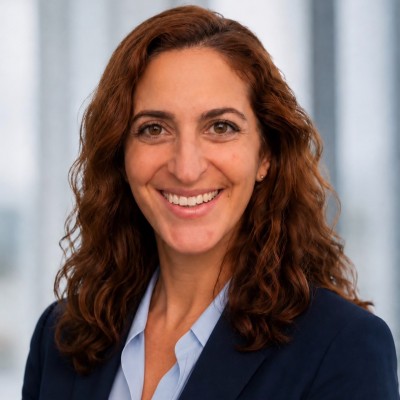
Caroline Naumann
Caroline Naumann

Group Resilience Lead, Vattenfall

Case Study
10:00AM — 10:25AM

Cyber Risk Management & Compliance – Navigating Regulations, Governance Frameworks, and Best Practices for Energy Sector Security

  • Understand the EU regulatory ecosystem.
  • Strengthen governance and management accountability.
  • Manage cross-border and systemic energy risks.
  • Secure OT, digitalised grids and the supply chain.
  • Move from compliance to operational resilience.
Speaker
Ricardo Pimentel
Ricardo Pimentel

Data Protection Expert, Creos Luxembourg SA

Networking Break
10:25AM — 10:55AM

Coffee and Networking Break

.

Case Study
10:55AM — 11:20AM

How to Build a Robust, Cost Effective, and NIS2 Compliant OT Security Architecture in an International Photovoltaic Parks Network with Dozens of Clients

  • How to start building an OT architecture for solar parks from scratch.
  • Creating a scalable security ecosystem where it is easy to include other PV parks for O&M.
  • Segmentation is not enough: OT security is way more than the Purdue Model.
  • Monitoring and investigation challenges in a sensitive intervention network.
  • Long term thinking challenges in a dynamic, remote field.
  • AI offensive capabilities increased patch SLAs in OT networks too.
  • How NIS2 tremendously helped critical infrastructure security.
  • OT cybersecurity in contracts: Lessons learned.
  • The real importance of OT cyber certifications for the team and company.
  • The critical role of separating duties between cyber and infrastructure owners.
Speakers
Georgian Șerban
Georgian Șerban

Head of Cybersecurity, WALDEVAR Energy

Fabian Michel
Fabian Michel

Head of Cyber Security and Operational Technology (OT), BELECTRIC GmbH

Case Study
11:20AM — 11:45AM

From Compliance to Real Cyber Resilience: Making NIS2 and CRA Compliance Operational

The presentation will focus on how organisations can move from regulatory requirements and formal compliance towards cybersecurity that actually works in day-to-day operations. Key discussion points:
  • Turning NIS2, the Cyber Resilience Act and ISO 27001 requirements into practical security activities, responsibilities and decisions.
  • Moving from point-in-time compliance towards continuous risk management and operational cyber resilience.
  • Management accountability under NIS2, including ownership, mandates and decision-making around cyber risk.
  • Connecting organisational security, supply-chain security and product security as NIS2 and the CRA increasingly overlap.
Speaker
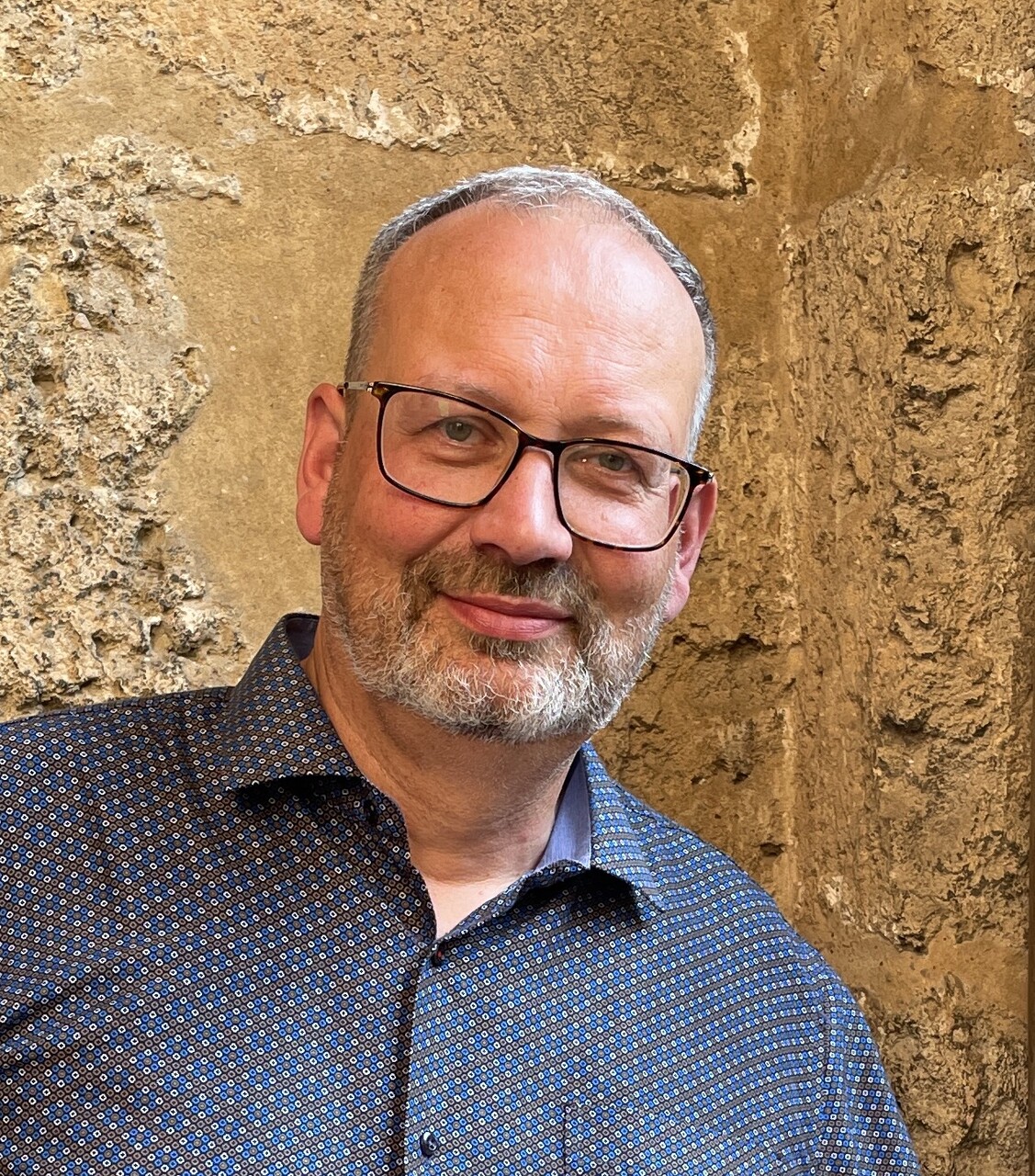
Karsten Dahl Vandrup

Cybersecurity Advisor, Associate Professor, Zealand

Case Study
11:45AM — 12:10PM

Challenges With NIS2/CER Compliance for Energy Companies with Multiple, Geographical Distributed Facilities and High Levels of Outsourced Activities and Services

The EU NIS2 and CER directives have categorized Entities based on their size, capacity and turn-over, without consideration for company structures such as a single organization or one with many subsidiaries. The classic concern raised by such of our clients is, where exactly does my company fit in and where, as well as how, do I apply the EU directives, regulations and transcriptions into laws, as well as drive the compliances? This presentation will explore these concerns, present some examples and propose suitable governance structures as well as potential information and cyber security management implementation strategies for companies with lean holding structures, several geographically distributed subsidiary companies, and high levels of services outsourcing, all to satisfy NIS2/CER.
Speaker
Alfred K. Schröder
Alfred K. Schröder

Principal Consultant OT Cybersecurity, DNV Cyber

Case Study
12:10PM — 12:35PM

Understanding the Adversary: How to Protect Your Asset Without Breaking Project Financing

  • A history of cyberattacks in the renewable energy sector.
  • Financial cyberattacks, geopolitical attacks and cyber vandalism.
  • Recent notable cyberattacks on Europe's electricity grid.
  • Lessons from Ukraine, Taiwan, Israel and the United States.
  • What are the "weak spots" attackers love in power plants (Hint: CCTV).
  • The challenges of protecting small plants with limited OPEX.
  • Challenges of building teams despite the cyber talent shortage.
  • Effective approaches for cyberdefense.
Speaker
Uri Sadot
Uri Sadot

Managing Director at SolarDefend Chair on Cybersecurity at SolarPower Europe, SolarDefend SolarPower Europe
Case Study
12:35PM — 01:00PM

China, Energy Sovereignty, and the Cyber Threat to the European Grid

  • Energy sovereignty and the risks of Europe’s dependence on Chinese solar and battery technology.
  • What the China-related cybersecurity risk actually looks like—and where the concern is justified.
  • Why supply-chain controls alone cannot protect plants built or operated with weak cybersecurity.
  • protecting critical infrastructure from foreign interference.
  • Building security into procurement, plant architecture, and remote access
Speaker
Ryan Davidson
Ryan Davidson

Subject Matter Expert for Grid Digitalization and Cybersecurity - Freelance Consultant; Former Principal Consultant – Grid Digitalization and Cybersecurity, DNV

Lunch Time
01:00PM — 02:00PM

Lunch Time Break

.

Panel Discussion
02:00PM — 02:40PM

Why Cyber Security Should be a Primary Concern for Utilities and Renewable Energy

  • Why should cybersecurity be a primary concern for utilities and renewable energy companies? What distinguishes renewable energy from other forms of critical infrastructure from a cybersecurity perspective?
  • For the purposes of NIS2 compliance, is cybersecurity a one-time deliverable that can be considered complete at commissioning, or is it a continuous operational process requiring ongoing attention and improvement?
  • In a photovoltaic (PV) park, multiple stakeholders may access the network through their own edge devices and internet connections, for example: the asset owner, the SCADA team, cybersecurity personnel, the grid operator, the CCTV provider. How can such an environment be secured when it has so many independent entry points?
  • How much does cybersecurity add to the overall cost of a PV project, and how does that compare with the potential cost of a significant cyber incident?
  • OEMs managing first level SCADA protection.
  • Who should be responsible for the security of assets?
  • The importance of bringing all players together to develop
  • Industry standards.
  • Should RE be more involved in how data is handled by suppliers and demand a higher level of security?

Moderator

Uri Sadot / SolarDefend / SolarPower Europe

Panellists

Georgian Șerban / WALDEVAR Energy

Fabian Michel / BELECTRIC GmbH

Sjoerd Peerlkamp / Bureau Veritas Cybersecurity

Arijeta Pajaziti Qerimi / KOSTT j.s.c.

Jose Manuel Troya Valero / Hitachi Energy

Aurelio Blanquet / EE-ISAC

Martin Sloan / Drax Group


Case Study
02:40PM — 03:05PM

Beyond Segmentation: Building Trusted Communication Paths in Renewable Energy OT

  • Why network segmentation, zones, conduits, routing, and firewall policies remain essential, but do not describe the complete security and operational requirements of an OT communication path.
  • What makes a communication path trustworthy in practice: it should be defined, controlled, protected appropriately, observable, tested, and maintainable throughout its lifecycle.
  • How hybrid and multi-supplier renewable plants expose the architectural tension between isolating OEM subsystems and enabling the communication required for plant-level coordination, SCADA, monitoring, and support.
  • Why different communication risks require different controls, including firewall governance, PAM, TLS, OPC UA security, IPsec, and selected use cases for MACsec, while preserving availability, troubleshooting, and recoverability.
  • Practical examples including OEM remote access, where a VPN protects the tunnel but does not define the complete access strategy, and Layer 2 protection across remote OT sites.
  • How a Trusted Conduit Profile can provide a structured, risk-based way to document purpose, endpoints, controls, technical limitations, compensating measures, test evidence, recovery behavior, and responsibility.
  • How standardized communication profiles, reusable controls, and justified deviations can help scale cybersecurity across renewable portfolios, including smaller plants where cyber requirements may still be significant.
Speaker
Romulo Caliri
Romulo Caliri

OT System Architect, European Energy A/S

Case Study
03:05PM — 03:30PM

Challenges for Cyber Security Operations Centers in Electrical Power & Energy Systems

  • Electrical Power & Energy Systems (EPES) are becoming smart and digitalised. These smart grids integrate advanced metering, real‑time monitoring, automation, and distributed control systems to support bi‑directional flows, demand flexibility, and high DER penetration. The downside is that the attack surface for cyber-attacks that could disrupt the security of supply or breach confidentiality of data increases; cyber security and data protection therefore become essential elements to avoid these disruptions and breaches.
  • A modern EU grid must withstand physical hazards, system failures, and evolving cyber threats. Regulation as the NIS2 Directive, the EU Network Code on Cyber Security (NCCS), mandate measures that reinforce cyber security and cyber resilience throughout the energy transition. One of the requirements in the NCCS is to set up a cyber security operations centre (CSOC), to detect and respond to cyber security incidents.
  • In the presentation we discuss challenges for CSOCs in Electrical Power & Energy Systems (EPES) and present potential solutions to address these challenges.
  • The work presented is based on the work in the eFORT project, an EU-funded initiative aimed at bolstering the resilience and security of Europe's power grids against failures, cyberattacks, physical disturbances, and data privacy issues. The project is finalized on September 1st of 2026.
Speakers
Reinder Wolthuis
Reinder Wolthuis

Senior Consultant for Communication Infrastructure Resilience, TNO

Frank Fransen
Frank Fransen

Senior Scientist, Cyber ​​Security Technologies Department, TNO

Case Study
03:30PM — 04:00PM

Beyond Post-Quantum Cryptography: Architecting Energy-Grid Resilience for Cyber, Edge, and Timing Failures

An estate can achieve complete cryptographic resilience and still fail to achieve architectural resilience. PQC is therefore necessary in some contexts, but treating it as synonymous with quantum readiness or as the dominant definition of resilience... creates a dangerous blind spot for critical national infrastructure.

Attendees leave with:

  • A way to identify the limits of PQC-centric security programmes;
  • A broader understanding of quantum and non-quantum resilience dependencies;
  • A practical outcome-focused view of continued operation during disruption;
  • A model for protecting the minimum viable business;
  • A way to connect technical architecture with emerging resilience obligations.
Speaker
Peter Kaela
Peter Kaela

Cyber Innovation Lead and Lead Cybersecurity Architect, SP Energy Networks

Networking Break
04:00PM — 04:30PM

Coffee & Networking Break

.

Case Study
04:30PM — 04:55PM

Evolving Threat Landscape of Wind Farms

The Dutch offshore wind sector is crucial for our energy transition and therefore also an attractive target for geopolitically-motivated cyberattacks. Bureau Veritas Cybersecurity brought together stakeholders from the sector under the FLECS program for a thorough analysis of vulnerabilities in wind farms, grid connections, and supply chains. Through a sector-wide crisis exercise, it also prepared the industry for real-world cyber crises. Stronger together.

- Strategic Importance & Risk: The offshore wind sector is vital to the Netherlands' energy transition but faces heightened geopolitical cyber threats.

- Comprehensive Vulnerability Assessment: Bureau Veritas Cybersecurity conducted an in-depth analysis covering three critical areas:

- Offshore wind infrastructure.

- Grid connection systems.

- Supply chain security.

- Proactive Crisis Preparedness: A sector-wide crisis exercise was conducted to prepare industry participants and government for real-world cyber incidents.

- Collaborative Approach: The FLECS program demonstrates the value of systemic collaboration for strengthening collective cybersecurity resilience within an ecosystem.

Speaker
Sjoerd Peerlkamp
Sjoerd Peerlkamp

Global Director Industrial Cybersecurity, Bureau Veritas Cybersecurity

Case Study
04:55PM — 05:20PM

Securing Wind Farm Operations. Mitigating Cyber Threat Amid Geopolitical Tensions

  • Evolving cyber threats and their impact on wind farm operations.
  • Why compliance with standards and regulations is necessary but not sufficient.
  • Approaches to improving resilience in a changing risk environment.
Speaker
Richard Sammet
Richard Sammet

Chief Offshore Products & Solutions Security Officer, Siemens Gamesa
Case Study
05:20PM — 05:45PM

Cyberattacks on the Energy System of Ukraine: Challenges and Prevention Measures

  • Escalation of cyberattacks on Ukraine.
  • Attacks on renewable energy.
  • Countermeasures and prevention measures
Speaker
Oleksandr Laktionov
Oleksandr Laktionov

Head of International Partnership Cooperation, Helios Strategia Group

Case Study
05:45PM — 06:10PM

Solar Energy Cybersecurity

  • Physical risks of decentralized power grids.
  • Inverter vulnerabilities. The risk of unauthorized remote shutdowns or firmware manipulation that could destabilize local voltage levels.
  • How a single breach at a management software provider could allow a "fleet-wide" attack on thousands of distributed sites simultaneously.
  • Supply chain transparency. Ensuring no "backdoors" exist in the firmware of imported components.
  • Grid resilience and islanding. How to "island" solar microgrids securely, so they cannot be re-infected by the main grid.
Speaker
Dr. Shari P. Finner
Dr. Shari P. Finner

Senior Consultant IT/OT Security and Autonomous Cyber ​​Resilience, TNO

Case Study
06:10PM — 06:35PM

The Control Plane Is the Safety Plane: Battery Storage Versus the Renewable Cybersecurity Playbook

  • Why BESS is not just another DER.
  • EMS, PCS and BMS: who actually controls safety.
  • Fleet trip vs. local thermal risk.
  • What the Poland attack pathway means for storage.
  • OEM remote access, firmware and fire systems.
  • Practical controls, contracts and insurance.
Speaker
David Garlits
David Garlits

Senior Information Security Manager, ENCAVIS AG

Closing Remark
06:35PM — 06:45PM

End of Day 1/Day One Summary by the Chairman

.