

Agrivoltaics: Uniting Solar Power and Sustainable Agriculture
In a world facing the dual challenge of feeding a growing population and meeting rising energy demands, agrivoltaics has emerged as a forward-thinking solution that blends agriculture and solar power on the same land. Rather than choosing between crops or clean energy, agrivoltaics invites both to thrive side by side — maximizing land use efficiency while advancing sustainability goals.
What Is Agrivoltaics?
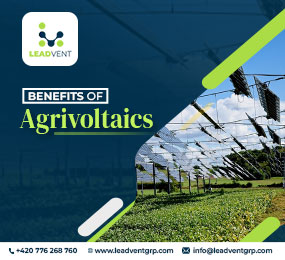
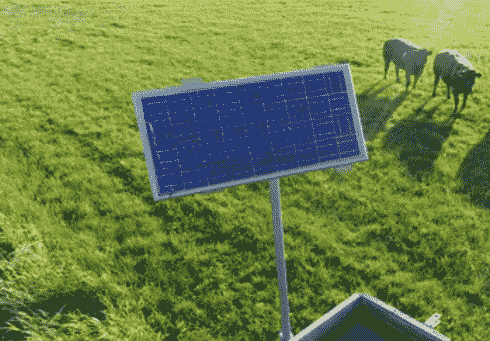
Agrivoltaics, also known as solar sharing, involves the installation of solar panels above farmland, allowing sunlight to be shared between the panels and the crops beneath them. This innovative approach enables farmers to generate renewable energy while continuing to cultivate their land. The system’s design often includes elevated panels and adjustable structures that let sufficient light reach crops, striking a balance between energy production and agricultural yield.
The Dual Benefits of Agrivoltaics
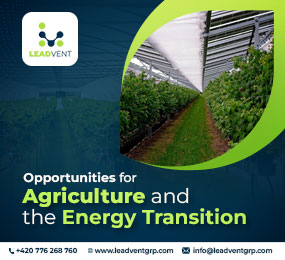
One of the main strengths of agrivoltaics lies in its mutual benefits for both farmers and the environment. The shade provided by solar panels can protect crops from extreme weather, reducing heat stress and water evaporation. Studies have shown that crops such as lettuce, peppers, and tomatoes can actually grow more efficiently under partial shade conditions, particularly in hot and arid climates.
At the same time, the integration of solar power offers farmers a new income stream. Electricity generated on-site can be used for farm operations, reducing costs, or sold back to the grid. This dual-use model not only increases land productivity but also provides financial resilience in an era of fluctuating agricultural markets.
A Step Toward Climate-Resilient Farming
Agrivoltaics supports the global effort to combat climate change by promoting renewable energy generation and sustainable land management. In regions vulnerable to droughts or soil degradation, this system helps conserve water and maintain soil fertility. Furthermore, by decentralizing power generation, it contributes to rural electrification — empowering remote farming communities and reducing dependency on fossil fuels.
Countries like France, Japan, and Germany have been early adopters of agrivoltaic systems, using policy incentives and pilot projects to explore scalability. In Africa and
parts of Asia, agrivoltaics holds promise for enhancing food security while addressing energy poverty — a crucial step toward a more equitable and sustainable energy future.
Challenges and the Path Forward
Despite its potential, agrivoltaics is still evolving. Key challenges include high initial costs, technical integration with farm machinery, and the need for adaptive regulations that recognize this dual-use model. However, with growing interest from policymakers, investors, and researchers, the sector is quickly gaining momentum.
As technology advances, modular and flexible designs are making agrivoltaic systems easier to deploy and maintain, paving the way for broader adoption.
Takeaway Point: Agrivoltaics is redefining how we think about land, proving that agriculture and renewable energy can coexist and complement one another. By harvesting both sunlight and crops, it offers a path toward climate resilience, rural empowerment, and a sustainable energy future — one where the sun nourishes both people and power.
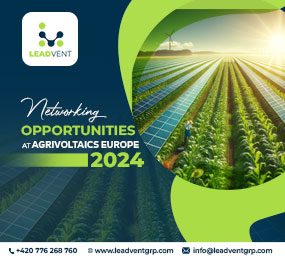
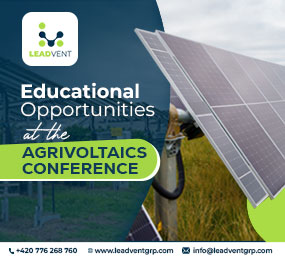
Learn more on our website: https://www.leadventgrp.com/event/4th-annual-agrivoltaics-europe/register
For more information and group participation, contact us: [email protected]
Leadvent Group - Industry Leading Events for Business Leaders!
www.leadventgrp.com | [email protected]






Comment