

Automotive Safety: Protecting Lives in Motion
Automotive safety has always been at the heart of mobility. Every time a driver starts their engine, countless safety systems work quietly in the background to protect lives from seatbelts and airbags to advanced digital sensors that anticipate danger before it happens. As the world moves toward smarter and more sustainable mobility, the importance of automotive safety is being redefined.
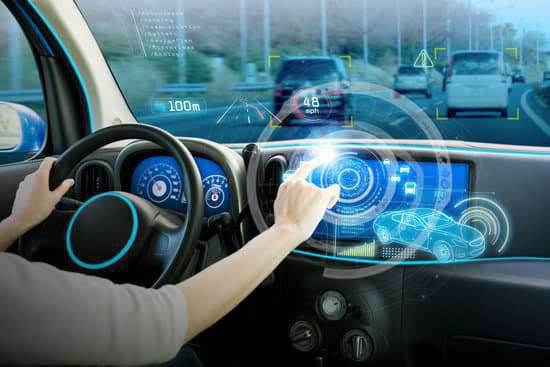
What once relied purely on mechanical systems is now powered by intelligent technology. Today’s vehicles are equipped with advanced driver-assistance systems (ADAS) that can detect collisions, apply brakes automatically, and even keep cars centered within lanes. These innovations aren’t just about convenience; they’re about creating a world where road accidents are minimized, and lives are saved through precision and predictive capability.
The Rise of Intelligent Safety Systems
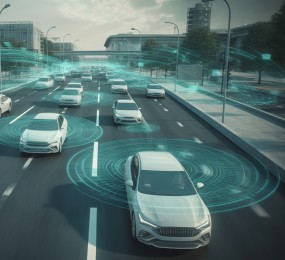
The modern automobile is as much a computer as it is a machine. Sensors, cameras, radar, and LiDAR work together to give vehicles a 360-degree awareness of their surroundings. These systems are the foundation of semi-autonomous and fully autonomous driving, helping to reduce human error the leading cause of road accidents globally.
Features such as adaptive cruise control, blind-spot monitoring, and automatic emergency braking have become standard in many new models. Beyond the vehicle itself, automakers are also integrating vehicle-to-everything (V2X) communication, which allows cars to “talk” to traffic signals, other vehicles, and infrastructure. This interconnected ecosystem holds the potential to create safer, more efficient roads where accidents can be prevented before they occur.
The Human Element and Regulatory Evolution
Despite technological advances, human behavior remains at the core of automotive safety. Education, driver training, and awareness campaigns continue to play a crucial role in ensuring that technology complements rather than replaces responsible driving. Governments and industry bodies worldwide are tightening regulations and safety standards to reflect these new realities.
From Europe’s General Safety Regulation (GSR) mandating advanced safety features in all new cars, to the U.S. National Highway Traffic Safety Administration (NHTSA) pushing for automated safety technologies, policy is
catching up with innovation. Meanwhile, manufacturers are continuously testing and refining their systems to meet these ever-evolving expectations.
The Road Ahead
As vehicles become more connected and electrified, the definition of safety will continue to expand. It’s no longer limited to crash protection but includes cybersecurity, data integrity, and sustainable design. Ensuring that the vehicle’s digital safety matches its physical safety is now a top priority.
The automotive industry’s collective vision is clear a future where zero fatalities, zero collisions, and zero emissions coexist. It’s an ambitious goal, but one that reflects the shared responsibility of automakers, policymakers, and drivers.
Takeaway:
Automotive safety is no longer just about surviving accidents, it’s about preventing them altogether. With intelligent systems, stronger regulations, and a renewed focus on human behavior, the future of driving is becoming safer and smarter. Every technological breakthrough brings the world closer to roads where innovation protects, precision saves, and every journey ends safely.
Learn more on our website: https://www.leadventgrp.com/event/3rd-annual-automotive-functional-safety-forum/register
For more information and group participation, contact us: [email protected]
Leadvent Group - Industry Leading Events for Business Leaders!
www.leadventgrp.com | [email protected]












Comment