

E-Ammonia for Shipping Decarbonisation: A Pathway to Low-Carbon Maritime Transport
The global shipping industry is the backbone of international trade, transporting more than 80% of goods worldwide. While maritime transport is one of the most efficient modes of cargo movement, it remains a significant source of greenhouse gas emissions. As regulators, shipowners, cargo owners, and investors push for cleaner operations, the search for scalable low-carbon fuels has intensified. Among the leading contenders, e-ammonia is emerging as a promising solution for achieving long-term shipping decarbonisation.
Produced using renewable electricity, green hydrogen, and atmospheric nitrogen, e-ammonia offers a pathway to significantly reduce emissions from maritime transport while supporting the industry's ambitious climate goals. As the sector works toward net-zero targets, e-ammonia is increasingly viewed as a fuel capable of powering deep-sea shipping without relying on fossil fuels.
What Is E-Ammonia?
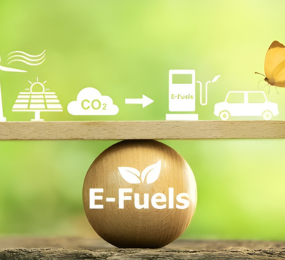
E-ammonia is a synthetic fuel produced through a process powered by renewable energy. The process begins with electrolysis, where renewable electricity from sources such as wind or solar power is used to split water into hydrogen and oxygen. The green hydrogen is then combined with nitrogen extracted from the air through the Haber-Bosch process to produce ammonia.
Unlike conventional ammonia, which is typically manufactured using natural gas, e-ammonia can be produced with very low lifecycle carbon emissions when renewable electricity is used throughout the production process.
This makes e-ammonia an attractive option for sectors that are difficult to electrify, particularly long-distance maritime transportation.
Why Shipping Needs Alternative Fuels
The shipping industry faces unique challenges in its decarbonisation journey. Large ocean-going vessels require energy-dense fuels capable of supporting long voyages and heavy cargo loads. Battery-electric solutions are often impractical for transoceanic shipping due to energy storage limitations.
Traditional marine fuels such as heavy fuel oil and marine diesel contribute significantly to global carbon emissions. As environmental regulations become stricter and international climate commitments become more ambitious, the industry must adopt alternative fuel solutions that can reduce emissions while maintaining operational performance.
E-ammonia offers a potential answer to this challenge.
Benefits of E-Ammonia for Maritime Transport
One of the most significant advantages of e-ammonia is that it contains no carbon molecules. This means that when used in properly designed engines or fuel cells, it does not produce carbon dioxide emissions during combustion.
Another important benefit is its suitability for long-distance shipping. Ammonia has a relatively high energy density compared to many alternative fuels, making it a viable option for deep-sea vessels that require substantial onboard fuel storage.
The global ammonia industry also provides a valuable foundation for future maritime fuel supply chains. Existing infrastructure for ammonia production, transportation, storage, and handling can help accelerate deployment compared to entirely new fuel systems.
E-ammonia can also support broader energy transition goals by acting as a carrier for renewable energy. Countries with abundant renewable resources may eventually become major exporters of green ammonia, creating new opportunities for international energy trade.
Challenges to Overcome
Despite its potential, e-ammonia faces several obstacles before widespread adoption can occur.
Production costs remain higher than those of conventional marine fuels because large amounts of renewable electricity are required to manufacture green hydrogen and ammonia. Expanding renewable energy capacity will be essential to achieving competitive fuel prices.
Infrastructure development is another challenge. Ports, bunkering facilities, storage terminals, and distribution networks must be upgraded to support ammonia as a marine fuel.
Safety considerations are equally important. Ammonia is toxic and requires specialized handling procedures. The maritime industry is actively developing safety standards, crew training programs, and operational guidelines to ensure safe deployment.
Growing Industry Momentum
Interest in e-ammonia continues to grow across the shipping value chain. Shipowners, engine manufacturers, fuel producers, port operators, and governments are investing in pilot projects, technology development, and infrastructure planning.
New vessel designs capable of operating on ammonia are progressing through development and testing phases. At the same time, producers are announcing large-scale green ammonia projects aimed at supplying future maritime fuel demand.
Policy support is also accelerating market growth. International emissions reduction initiatives and decarbonisation strategies are creating incentives for low-carbon fuel adoption and encouraging investment throughout the ammonia supply chain.
Looking Ahead
No single fuel is likely to solve shipping's decarbonisation challenge on its own. However, e-ammonia has emerged as one of the strongest candidates for reducing emissions from long-distance maritime transport.
Its ability to provide carbon-free energy at the point of use, combined with growing industry support and expanding infrastructure investments, positions it as a key component of the future maritime fuel mix.
As production scales increase and technology continues to improve, e-ammonia could play a central role in helping the shipping industry achieve its climate objectives while maintaining the efficient movement of global trade.
Takeaway Point
E-ammonia is emerging as a leading alternative marine fuel because it can be produced using renewable electricity, generates no carbon dioxide emissions at the point of use, and offers the energy density needed for long-distance shipping, making it a critical solution for maritime decarbonisation.
Learn more on our website: https://www.leadventgrp.com/event/3rd-annual-world-e-fuels-summit/register
For more information and group participation, contact us: [email protected]
Leadvent Group - Industry Leading Events for Business Leaders!
www.leadventgrp.com | [email protected]








Comment