

Floating Solar: Expanding Clean Energy Beyond Land Constraints
As the demand for renewable energy grows, so does the challenge of finding suitable land for large-scale solar projects. In many regions, land competition with agriculture, housing, and conservation limits how far traditional solar installations can expand. Floating solar, also known as floating photovoltaic (FPV) systems, offers a practical and increasingly proven alternative by moving solar generation onto water surfaces.
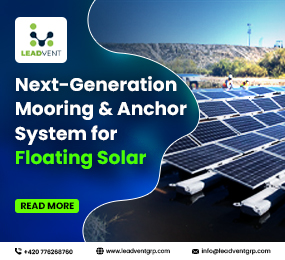
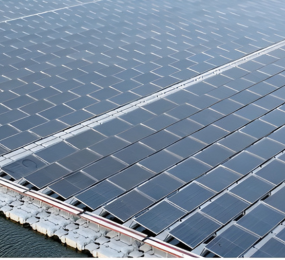
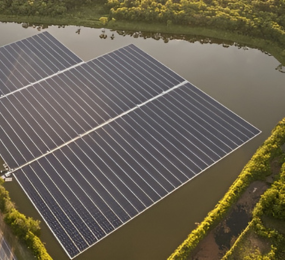
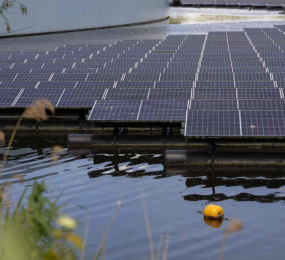
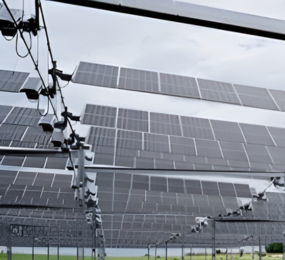
Floating solar involves installing solar panels on buoyant structures anchored on reservoirs, lakes, ponds, and other calm water bodies. While the concept may seem unconventional, it is built on familiar solar technology adapted to a different environment. What makes floating solar compelling is not novelty, but its ability to solve real constraints faced by energy developers and policymakers.
One of the strongest advantages of floating solar is efficient land use. By utilizing existing water bodies, projects avoid land acquisition challenges and reduce conflicts with other land-based activities. This is particularly valuable in densely populated regions or areas where land costs are high. Water bodies associated with hydropower dams, irrigation reservoirs, and water treatment facilities are increasingly seen as ideal sites, allowing energy generation to expand without additional spatial pressure.
Floating solar systems can also deliver performance benefits. The cooling effect of water helps reduce panel temperatures, which can improve efficiency compared to ground-mounted systems exposed to high heat. While the gains vary by location, even modest improvements can make a meaningful difference over the life of a project. At the same time, covering parts of a reservoir can reduce water evaporation, offering added value in water-stressed regions.
From an operational perspective, floating solar encourages hybrid energy models. When paired with hydropower, FPV can complement generation patterns by producing electricity during daylight hours while hydropower balances supply during peak demand or low solar output. This synergy supports grid stability and maximizes the use of existing transmission infrastructure.
Despite its promise, floating solar requires careful planning. Water depth, wave activity, wind exposure, and water level fluctuations all influence system design. Anchoring solutions must be robust, and materials must withstand constant exposure to moisture and sunlight. Environmental considerations are equally important. Developers must assess impacts on water quality, aquatic life, and local ecosystems to ensure projects are both technically sound and socially responsible.
The market for floating solar has grown steadily over the past decade, moving from pilot projects to utility-scale installations. Countries in Asia have led early deployment, but interest is expanding across Europe, Africa, and the Americas as governments seek flexible renewable energy options. As experience grows, costs are becoming more competitive, and standards are emerging to guide safe and reliable deployment.
Floating solar is not positioned to replace land-based solar, but to complement it. Its value lies in expanding the range of viable sites for clean energy and encouraging smarter use of existing infrastructure. As energy systems evolve, solutions that balance practicality, efficiency, and environmental care will play an increasingly important role.
In this context, floating solar stands out as a thoughtful response to modern energy challenges. It reflects a shift from simply adding capacity to designing systems that fit naturally within the spaces we already use.
Takeaway Point
Floating solar demonstrates how renewable energy can grow without competing for land, offering a flexible and efficient pathway to expand clean power while making better use of existing water resources.
Learn more on our website: https://www.leadventgrp.com/event/6th-annual-floating-solar-pv-forum/register
For more information and group participation, contact us: [email protected]
Leadvent Group - Industry Leading Events for Business Leaders!
www.leadventgrp.com | [email protected]





Comment