

Introducing Innovations to Accelerate the Use of Agrivoltaics
The global energy sector is facing a powerful challenge: how do we meet the growing demand for both food and clean energy without compromising our land resources?
Agrivoltacis it's that innovative dual approach of solar energy generation with agricultural production on the same land. It has evolved from experimental installations to commercial-scale distribution across farm fields of Europe.
Combining these two critical industries offers a way to maximize land use. However, even with strong potential, its adoption has been slow. Common hurdles are initial high costs, complex system design, and lack of supportive policies.
The Leadvent Group's 4th Annual Agrivoltaics Europe agricultural conference is where these hurdles are discussed as the industry accelerates toward mainstream adoption. Recent developments in adaptive panel technologies, precision mounting systems, and integrated monitoring solutions are systematically removing adoption barriers.
Technical Innovations: Reshaping the Industry
Modern agrivoltaic systems enable farmers and energy developers to share land resources for dual food and energy production through technological innovation. These scientific developments represent the primary focus of leading agricultural conferences throughout Europe.
Advanced Panel Design
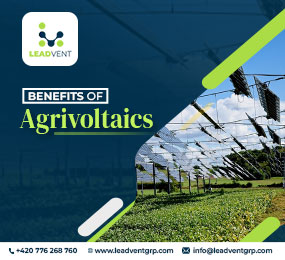
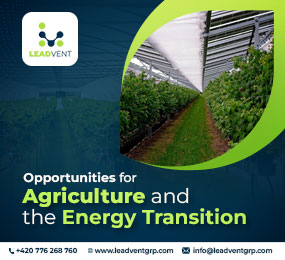
Latest agrivoltaic systems feature semi-transparent photovoltaic panels designed for greenhouse application, engineered for optimal sunlight penetration for plant growth, along with generating electricity.
These panels allow specific light wavelengths to pass through, creating an ideal microclimate for a variety of shade-tolerant crops, such as berries and leafy greens, and even tea plants underneath them. Bifacial solar panels collect sunlight from both sides, allowing crops to grow underneath while generating electricity on the same land.
Smart Mounting Solutions
Installing these panels taller, wider-spaced has made an engineering breakthrough by addressing the issue of agricultural access. Mounting them 10-16 feet above ground with carefully optimized spacing allows full-sized farming equipment to operate beneath panels. These innovations, regularly showcased at solar energy events, enable farmers to customize installations.
Modern agricultural machinery and large-scale farming practices under panels can seamlessly function without compromising on efficiency due to this innovation. These designs make agrivoltaics a practical and scalable solution for commercial agriculture
Integrated Water Management
Modern agrivoltaics design comes with water efficiency. Rainwater harvesting systems that capture and distribute precipitation, integrated into automated irrigation networks. These are triggered by real-time soil moisture sensors.
Solar panels create cooler, shadier growing conditions that help farmers pick crops that need less water. These systems work together to save water while producing both food and electricity from the same land.
Data & Digital Innovations: The Intelligence Behind Success
Beyond the physical device, agrivoltaics are the digital technologies that optimize operations. These intelligent systems are essential for de-risking projects and accelerating the widespread adoption of agrivoltaics.
IoT-Enabled Monitoring Systems
IoT (Internet of Things) sensors and devices are used to monitor soil moisture levels, ambient humidity, and crop health indicators, enabling farmers with visibility. It gives them the benefit of taking data-driven decisions, leading to higher yields, more efficient water management, and a significant increase in overall efficiency.
Co-optimization Strategies
Sophisticated balancing systems coordinate energy generation with agricultural productivity cycles. Strategic crop selection leverages shade tolerance profiles and current market values, allowing farmers to maximize revenue from both agricultural and energy outputs.
Performance Analytics
Digital twin technology creates virtual models of entire agrivoltaic installations, enabling operators to test scenarios and predict outcomes before implementing changes. Predictive maintenance algorithms analyze equipment performance data to schedule repairs during optimal windows, minimizing downtime for both energy generation and farming operations
European Leadership and the Path Forward with 4th Annual Agrivoltaics Europe
Europe leads the world in agrivoltaic farming, with working projects in Germany, France, Italy, and the Netherlands showing that the technology makes business sense. France is the largest agri-PV market in Europe. These successful farms teach other countries how to build their systems. In 2023, the global agrivoltaics market was valued at approximately $4 to $5.5 billion, with industry forecasts projecting annual growth rates of 8% to 11% through 2032.
European companies now sell their agrivoltaic technology to countries in Asia, Africa, and South America, where farmers need both more food and more electricity on limited land. Creating big business opportunities for European manufacturers and project builders.
The Leadvent Group's 4th Annual Agrivoltaics Europe conference brings together industry leaders to grow this market. This premier agricultural conference and solar energy event allows attendees to meet technology developers, project funders, and farming pioneers who shape the future of dual-use agriculture. The conference showcases new solutions, partnership opportunities, and market insights.
Frequently Asked Questions (FAQs)
1) Do solar panels negatively impact crop yields?
Research indicates agrivoltaics can mitigate midday depression in photosynthesis, leading to equal or greater yields across various crops, particularly in hot and arid environments. However, some studies show mixed results with overall crop yields varying depending on crop type and system design, emphasizing the importance of proper planning and crop selection.
2) What makes the Leadvent Group's agricultural conference different from other agrivoltaics events?
This agricultural conference brings together farmers, tech developers, and investors all in one place. You'll see live equipment demos, hear real success stories from European farms, and connect directly with people who've built these systems. It's practical knowledge you can use right away.
3) How do solar energy events differ from traditional renewable energy conferences regarding agrivoltaics coverage?
Solar energy events emphasize technical aspects of dual-use installations, including panel efficiency optimization, grid integration challenges, and energy storage solutions. These events feature equipment manufacturers, project developers, and financing specialists focused specifically on the energy generation aspects of agrivoltaic projects.
4) What maintenance is required for agrivoltaic systems?
Maintenance involves standard solar panel cleaning and inspection, plus ensuring agricultural machinery access remains clear. Modern systems use predictive analytics to schedule maintenance during optimal windows, minimizing disruption to both energy generation and farming operations.





Comment