

Life Cycle Assessment of Biogas Production: Environmental Impacts and Benefits
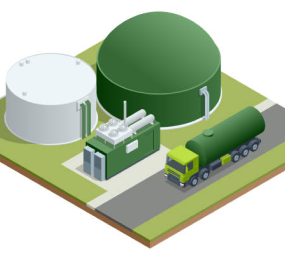
Biogas, generated through the anaerobic digestion of organic matter, is increasingly recognized as a key component of the circular economy. A Life Cycle Assessment (LCA) is the definitive tool for evaluating this fuel, providing a holistic view of its true environmental footprint from "cradle to grave." LCA tracks all inputs and outputs, confirming that biogas is not merely a renewable fuel source, but also a transformative waste management solution.
LCA studies consistently demonstrate that biogas production yields significant net environmental benefits, primarily through methane avoidance. By diverting municipal sewage, agricultural residues, and food waste from traditional landfills or open storage, biogas plants prevent the release of highly potent fugitive methane emissions. This avoidance alone provides the largest positive impact on global warming potential. Furthermore, when the resulting biomethane replaces fossil natural gas for heating or electricity generation, it delivers a direct reduction in carbon dioxide emissions. Finally, the coproduct, digestate, serves as an organic fertilizer, which reduces the need for resource-intensive, synthetic chemical fertilizers, thereby closing the nutrient loop in agriculture.
However, the LCA also flags potential environmental trade-offs that require careful management. The upstream stage, particularly the long-distance transport of bulky, wet feedstock, can result in significant fossil fuel consumption and associated emissions, undermining the net environmental savings. The system’s operational integrity is paramount; any leaks in the digester or gas storage systems can release raw biogas (primarily methane) directly to the atmosphere. Since methane's global warming potential is many times higher than CO2 over a short timeframe, even minor leaks can quickly negate the system's climate benefits.
In conclusion, LCA confirms biogas as an essential technology that offers a net environmental advantage over both conventional energy and waste disposal methods. Realizing this potential, however, depends entirely on policy and design choices that prioritize short-chain logistics and rigorously maintained, leakproof operational processes.
Visit our website to know more: https://www.leadventgrp.com/events/2nd-annual-biogas-biomethaneworld-summit/details
For more information and group participation, contact us: [email protected]
Leadvent Group - Industry Leading Events for Business Leaders! www.leadventgrp.com| [email protected]






Comment