

From Fixed to Floating: Offshore Wind Europe's Journey to the Next Frontier
Every market trying to build offshore wind today is studying Europe. The targets, the turbine specs, the auction structures.
What they rarely study is the part that actually determined the outcome: the decisions that looked wrong at the time, the projects that failed publicly, and the years where nothing seemed to move.
Europe's lead in offshore wind was not built on ambition. It was built on what survived when the ambition ran into reality.
More Than Just Megawatts
The UK leads European capacity at over 14.7 GW. Germany follows at 8.5 GW, the Netherlands at 4.7 GW. Together, Europe holds roughly 45% of total global offshore wind capacity.
Raw capacity, though, only tells part of the story. What separates European markets is the combination of:
- Long-term government commitment, not just ambition
- Investable contract frameworks that gave developers confidence to spend
- A willingness to absorb first-mover risk before the economics were comfortable
Denmark launched projects when most countries were still debating feasibility. The UK built Hornsea while others were still in planning stages. These were policy decisions made early, and they compounded over time.
The core lesson: commitment before certainty is what separates wind leaders from wind aspirants.
When Growth Meets Reality
The 2022-2024 period tested every assumption the industry had built.
Inflation spiked. Interest rates rose. Supply chains buckled. High-profile project cancellations and financial write-downs followed. These pointed to a structural problem: auction designs that fixed prices years before construction, in markets where costs refused to stay still.
Europe's policy response has been instructive. Key shifts include:
- Indexed strike prices that adjust for inflation rather than locking in a fixed number
- Higher auction reservation prices that reflect what it actually costs to build at sea today
- Domestic manufacturing incentives, such as the UK's Sustainable Industry Rewards mechanism
Germany has experimented with negative bidding. France has accelerated its build-out. These are not just national experiments. They are evidence that regulatory frameworks must evolve alongside the market.
A CfD structure that worked in 2015 can become a project obstacle by 2024. Policy agility is not optional for any market serious about scaling offshore wind Europe.
The Supply Chain Problem Nobody Wants to Talk About
Supply chain constraints rarely make headlines. Yet they shape every project timeline and every budget.
The Global Wind Energy Council has identified potential bottlenecks in European fixed-bottom foundations from 2026 and floating foundations from 2029. At-risk components include:
- Installation and heavy-lift vessels
- Turbine towers and nacelles for 15+ MW machines
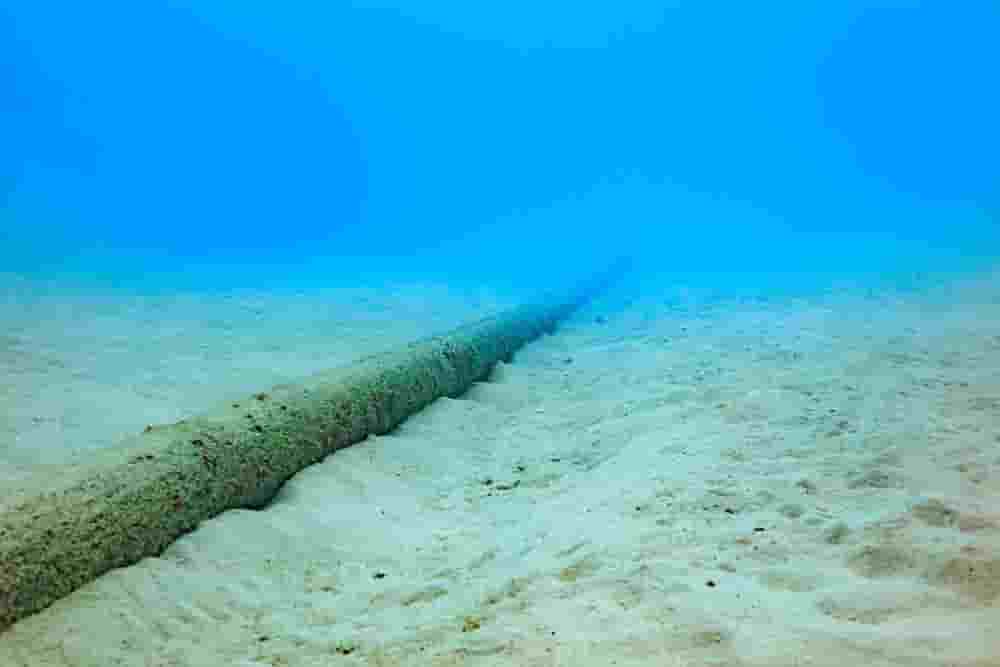
- Dynamic power cables
- Skilled labour across engineering, installation, and operations
The industry grew faster than the infrastructure supporting it. Offshore wind components have also evolved rapidly. Monopiles designed for today's turbines look nothing like those installed a decade ago. The supply chain has to keep pace with a moving target.
Developers who navigated this best secured turbine agreements and fabrication relationships early, before the queue formed.
For floating wind, oil and gas expertise in mooring systems, subsea engineering, and dynamic cable design transfers directly. The sectors that compete less and collaborate more will move faster.
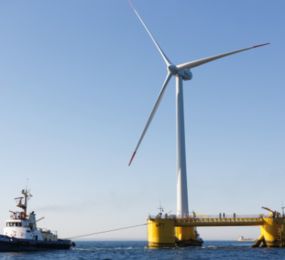
Floating Wind: Europe's Next Chapter
The question is no longer whether floating offshore wind will scale commercially. It is how quickly, and who will be ready.
The numbers make the case:
- Floating wind capacity will grow from under 1 GW today to over 16 GW by 2030
- By 2035, that figure will reach 48 GW
- Europe is expected to be the primary growth driver over the next decade
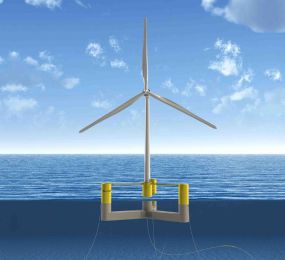
Norway, the UK's Celtic Sea region, and France have large areas of seabed in water too deep for fixed foundations. Floating technology is the only viable path for these markets. Spain and Portugal announced their first floating wind tenders in 2025. Asia is watching closely.
Projects like Green Volt in Scotland and Pennavel in France are proving grounds for bankability at mid-scale. Getting financing structures right, validating mooring performance, and developing installation methodology now are critical steps before full commercial deployment in the 2030s.
Europe's first-mover advantage is real. Without deliberate action to convert it into industrial capacity, it will not last.
The O&M Edge That Often Goes Unnoticed
Two decades of offshore wind assets in the water have given European operators something no newer market can buy: genuine operational experience.
Remote monitoring, vessel scheduling optimisation, and digital twin methodologies have matured across European wind farms. The industry has learned how to manage assets across their full lifecycle, not just commission them.
Floating platforms introduce new complexity — dynamic movement, deeper water access, and different failure modes. But the operational mindset built on fixed-bottom experience, data-driven and condition-based maintenance, transfers directly. Operators who enter floating wind with that foundation will hold a real advantage.
Where Europe's Floating Wind Leaders Meet Next
The 6th Annual Floating Wind Europe, taking place on 23rd-24th June 2026 at the Radisson Blu Hotel, London Heathrow, is where the conversations in this blog continue in person.
Organised by Leadvent Group, this focused floating wind conference brings together 150+ pre-qualified professionals across two days of case studies, panel discussions, and direct peer networking.
It is built for professionals across the value chain:
- Developers, project managers, and investors
- Turbine and floating platform manufacturers
- Mooring, cable, and subsea technology providers
- Port operators, policymakers, and O&M specialists
Speakers are confirmed from Equinor, DNV, ENGIE, Ramboll, KfW IPEX, ABN AMRO, Aker Solutions, Celtic Sea Power, the Scottish Government, and IRENA, among others.
Seats are limited and pre-qualified. If floating wind is part of your business in 2026, this is the room you need to be in. Secure your place at the 6th Annual Floating Wind Europe before registrations close.
Frequently Asked Questions
- What makes Europe the world's leading market for offshore wind?
Europe leads on installed capacity and institutional maturity. With over 37 GW in the water and decades of project experience across the UK, Germany, Denmark, and the Netherlands, it has built the reference model other markets now adapt. It has also been the first to confront and begin correcting the structural challenges that come with rapid scaling.
- Why is floating offshore wind considered a step change for the industry?
Most of the world's strongest wind resources sit in water too deep for fixed-bottom foundations. Floating technology unlocks those areas. It also allows turbines to operate where winds are stronger and capacity factors are higher. As commercial-scale projects drive cost reduction through the late 2020s, floating wind is expected to compete directly with fixed-bottom by the 2030s.
- What are the biggest challenges facing European offshore wind today?
Three challenges stand out. Supply chain capacity has not kept pace with ambition, with bottlenecks projected from 2026. Financial frameworks need updating, as fixed-price auction models proved inadequate during the inflationary period. And for floating wind specifically, the industry must achieve cost reduction, bankable project structures, and port infrastructure investment at the same time.
- Who should attend the 6th Annual Floating Wind Europe, and what will they gain?
The event is built for professionals across the full floating wind value chain. Developers, financiers, technology suppliers, port operators, policymakers, and O&M teams will all find sessions directly relevant to their work. Attendees connect with 150+ senior peers, access practical case studies, and gain perspectives on financing and technical challenges shaping the decade ahead.






Comment