

The Beginner’s Guide to Greener Flight
Aviation burns nearly 100 billion gallons of jet fuel every year. That number is not slowing down. As passenger demand rebounds and air freight continues to grow, the industry faces one non-negotiable question: where does cleaner fuel come from?
The answer already exists. It is already flying. And the race to scale it is happening faster than most people realise.
This guide breaks down what sustainable aviation fuel is, how it works, why it matters, and what stands between today's limited supply and tomorrow's cleaner skies.
What Is SAF, and How Is It Made?
Sustainable aviation Fuel is jet fuel produced from renewable or waste-based sources instead of fossil crude. Chemically, it performs the same as conventional jet fuel. It works in existing engines and moves through existing airport fuelling systems. No retrofits, no new infrastructure needed. That is why the industry calls it a "drop-in" fuel.
What sets SAF apart is what goes into making it. The feedstocks include:
- Used cooking oil and waste animal fats – processed through Hydroprocessed Esters and Fatty Acids (HEFA), the most widely used production pathway today
- Municipal solid waste, forestry residues, and agricultural leftovers – converted through Fischer-Tropsch synthesis
- Green hydrogen and captured CO? – combined to produce e-SAF or Power-to-Liquid fuel, the most advanced pathway with the highest emissions reduction potential
When SAF burns, the CO? released is absorbed by the feedstock itself. That is recycled carbon, not ancient carbon unlocked from underground reserves for the first time. Depending on the pathway and feedstock, SAF can cut lifecycle greenhouse gas emissions by 50% to nearly 100% compared to conventional jet fuel.
Why Electrification Is Not the Short-Term Answer
Electric aircraft and hydrogen planes attract headlines, but neither is ready at commercial scale.
Battery technology cannot match the energy density required to carry hundreds of passengers across long distances. Hydrogen-powered planes need entirely new airframes, storage systems, and airport infrastructure. That is a multi-decade transition, not a near-term fix.
SAF works today, in today's planes, on today's routes. That is why ICAO, IATA, and governments worldwide treat it as the most credible near-term lever for cutting aviation emissions.
Where SAF Stands Right Now
The momentum is real, but the gap between ambition and output remains wide.
- SAF made up 0.6% of total airline fuel consumption in 2025, up from 0.3% in 2024
- Over 140 SAF projects are underway across more than 100 producers in 31 countries
- Production capacity is forecast to reach 22.5 billion litres by 2030
- The global SAF market, valued at USD 3.55 billion in 2026, is projected to reach USD 134 billion by 2034
Regulation is the most powerful driver. The EU's ReFuelEU Aviation Regulation set a binding minimum of 2% SAF blend from January 2025, rising to 70% by 2050. ICAO's CORSIA framework adds a global layer, and the UK, Japan, and the US are all moving in the same direction with mandates and financial incentives.
The core challenge remains cost. SAF currently costs two to five times more than conventional jet fuel. Closing that gap requires diversified production pathways, long-term offtake agreements, and significant capital. Investment flows when policy is stable and demand signals are clear.
Who Needs to Act, and How
SAF's scale-up is not one sector's job. Every part of the value chain has a role to play.
- Airlines need long-term SAF purchase agreements to give producers the revenue certainty to build new facilities
- Fuel producers and refiners need to invest beyond HEFA into next-generation pathways
- Governments need policy that is ambitious, consistent, and investable
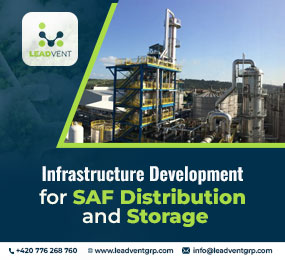
- Airports need to develop blending logistics and distribution infrastructure
- Investors and financiers need to price in the long-term opportunity in a tightening regulatory environment
- Technology developers are building the feedstock pipelines of tomorrow
Progress on SAF moves at the pace of the whole chain, not just its fastest link.
Where Industry Leaders Are Meeting in 2026
The decisions shaping SAF's next decade are being made by people in the same room, not in separate documents.
Leadvent Group, a specialist organiser of senior-level industry forums, is hosting the 2nd Annual World Sustainable Aviation Fuel Forum on 23rd–24th June 2026 at the Steigenberger Airport Hotel, Amsterdam, Netherlands.
This 2-day hybrid event brings together 35+ executive speakers and 150+ attendees for roundtables, panel discussions, and targeted one-on-one networking. It is one of Europe's most focused sustainable aviation events, built for professionals actively shaping how SAF scales globally.
The forum is built for senior leaders across:
- Airlines, airports, and fuel producers
- Biofuel and renewable energy developers
- Investors, financiers, and policy teams
- Engineering firms and sustainability functions
If your work touches SAF production, aviation decarbonisation, clean energy investment, or fuel policy, this aviation conference is where your next deal, partnership, or strategic insight begins.
Seats are limited. Register for the 2nd Annual World Sustainable Aviation Fuel Forum today and put yourself in the room where SAF's future gets decided.
Frequently Asked Questions (FAQs)
- Is SAF safe to use in commercial aircraft?
Yes. SAF meets the same ASTM international certification standards as conventional jet fuel. It has been used on hundreds of thousands of commercial flights worldwide. It blends with conventional fuel at up to 50%, with ongoing work to certify higher ratios. No modifications to aircraft engines or airport fuelling systems are required.
- How much can SAF reduce carbon emissions?
It depends on the feedstock and production pathway. Bio-based SAF from used cooking oil or agricultural waste cuts lifecycle CO? emissions by 60 to 80% compared to fossil jet fuel. E-SAF, made from green hydrogen and captured CO?, can achieve reductions of up to 90%. Costs are higher today but are expected to fall steadily as production capacity expands.
- Why is SAF still expensive, and will prices come down?
The higher cost reflects limited production capacity, feedstock competition, and capital-intensive facilities. As mandates create consistent demand and long-term supply contracts reduce financial risk for producers, prices are expected to fall significantly over the next decade. Policy incentives across the US, EU, and UK are already beginning to close the gap with conventional jet fuel.
- Who should attend the 2nd Annual World Sustainable Aviation Fuel Forum in Amsterdam?
The forum is designed for senior professionals across the SAF value chain. This includes airline and airport leaders, fuel producers, biofuel developers, investors, policy and regulatory teams, technology providers, and decarbonisation consultants. If your work connects to aviation's path to net zero, this is the right room to be in.







Comment