

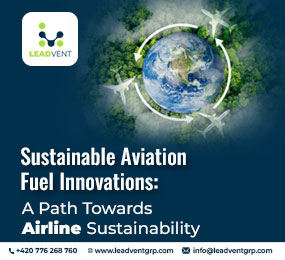
Sustainable Aviation Fuels: A Practical Pathway to Cleaner Flight
Aviation connects people, economies, and industries across the world, but its environmental impact has become a growing concern. With global travel on the rise and climate goals tightening, the aviation sector is under increasing pressure to adopt cleaner alternatives. This is where Sustainable Aviation Fuels (SAF) have emerged as a practical and meaningful solution—one that supports decarbonization while preserving the mobility the modern world relies on.
SAF is not a futuristic idea. It is already being blended into commercial flights and is gaining recognition from airlines, governments, and energy producers. Its biggest advantage is simple: SAF can reduce lifecycle emissions by up to 80% depending on the pathway, all while being compatible with existing aircraft and infrastructure.
Why SAF Matters Now
The aviation industry contributes roughly 2–3% of global carbon emissions. While this may seem modest, demand for air travel continues to grow, and fossil-based jet fuel remains the sector’s largest source of emissions. Unlike road transport, aviation cannot quickly shift to battery-powered alternatives due to weight and energy-density limitations.
SAF offers a bridge between today’s aviation needs and tomorrow’s climate commitments. By using sustainable feedstocks and cleaner production methods, it provides a credible path to immediate emission reductions.
What SAF Is Made From
Sustainable aviation fuels can come from a range of sources:
1. Waste oils and fats: Used cooking oil, tallow, and other residues
2. Agricultural residues: Crop waste, biomass, and forestry byproducts
3. Municipal waste: Household waste processed into fuel
4. Power-to-liquid pathways: Hydrogen combined with captured CO? to produce synthetic fuels
These sources avoid competition with food crops and help reduce waste, making SAF not only cleaner but also resource-efficient.
How SAF Supports Decarbonization
SAF is particularly attractive because it does not require major changes in aircraft technology. Airlines can blend SAF with conventional jet fuel and instantly lower their emissions. This ease of integration allows airports and carriers to adopt SAF without major operational disruptions.
In addition, SAF plays a vital role in national climate strategies. Many countries are now introducing blending mandates, offering incentives for producers, and investing in research to expand supply. As production scales, costs are expected to fall, making SAF more accessible to airlines worldwide.
Challenges on the Path Forward
Despite its potential, SAF is still in its early stages. Limited production capacity and higher costs remain the biggest barriers. While demand is rising, supply lags far behind the levels needed for global decarbonization targets. Building the required infrastructure will take time, investment, and collaboration across industries.
Still, momentum is growing. Airlines are signing long-term agreements, producers are expanding facilities, and governments are setting clearer frameworks to support the shift.
A Sector Ready for Transformation
SAF represents one of the most realistic near-term solutions for reducing aviation emissions. It acknowledges the operational realities of the industry while promoting responsible environmental progress. As more players commit to its development, SAF is becoming a central component of aviation’s transition to a cleaner, more sustainable future.
Takeaway Point
Sustainable aviation fuels offer a practical and immediate way to cut emissions in a sector where alternatives are limited. By supporting SAF production and adoption, the aviation industry can move confidently toward a cleaner, more resilient future without compromising global connectivity.
Learn more on our website: https://www.leadventgrp.com/event/2nd-annual-world-sustainable-aviation-fuel-forum/register
For more information and group participation, contact us: [email protected]
Leadvent Group - Industry Leading Events for Business Leaders!
www.leadventgrp.com | [email protected]





Comment