

The Financial Pivot: Mastering Total Cost of Ownership in Electric Fleet Adoption
For fleet managers, the transition to electric vehicles (EVs) represents a fundamental shift from managing volatile operating expenses to optimizing long-term capital investments. While the initial acquisition cost of an electric fleet can be $20\%$ to $40\%$ higher than internal combustion engine (ICE) counterparts, a Total Cost of Ownership (TCO) analysis reveals that EVs often reach parity—and subsequent profitability—within three to five years.
The Shift from Opex to Capex
The primary driver of EV TCO superiority is the dramatic reduction in operational expenditure (Opex). Electricity is not only cheaper than diesel or petrol per kilometer, but it also offers price stability that shields fleets from global oil market fluctuations. Furthermore, the mechanical simplicity of an EV—containing roughly twenty moving parts compared to the thousands in an ICE drivetrain—slashes maintenance costs by approximately $30\%$ to $50\%$. The elimination of oil changes, transmission repairs, and exhaust system upkeep translates directly into increased vehicle uptime.
Infrastructure and Residual Value
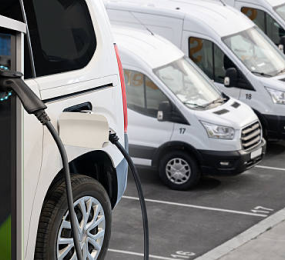
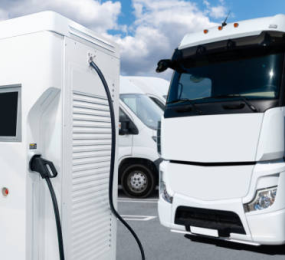
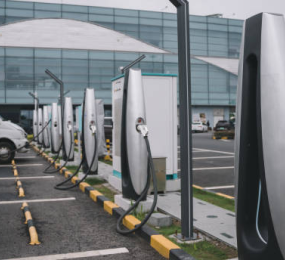
A comprehensive TCO model must account for charging infrastructure. While the "behind-the-meter" costs (chargers, software, and grid upgrades) are significant upfront capital expenditures (Capex), they are one-time investments that service the fleet for over a decade. Additionally, as the secondary market for used EVs matures, residual values are stabilizing. Smart charging strategies, such as peak-shaving and load management, further reduce the "fueling" cost, often allowing fleets to charge during lower-rate overnight windows.
The Bottom Line
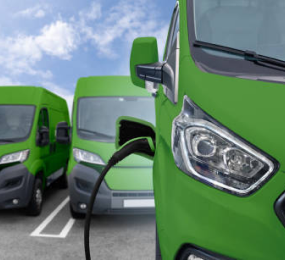
Transitioning to an electric fleet is no longer just a sustainability goal; it is a competitive necessity. By leveraging government incentives, tax credits, and the inherent efficiency of electric drivetrains, organizations can lower their per-mile costs, future-proof their operations against emissions regulations, and achieve a significantly lower TCO over the vehicle’s lifecycle.
Visit our website to know more: https://www.leadventgrp.com/events/fleet-electrification-and-decarbonisation-forum/details
For more information and group participation, contact us: [email protected]
Leadvent Group - Industry Leading Events for Business Leaders!
www.leadventgrp.com| [email protected]











Comment