

The Future of Europe's Offshore Supergrid: How Submarine Power Cables Are Connecting the Next Generation of Renewable Energy
Europe's energy landscape is undergoing one of the most significant transformations in its history. As countries accelerate the transition to renewable energy, the challenge is no longer simply generating clean electricity—it is ensuring that electricity reaches homes, industries, and businesses efficiently, reliably, and securely across borders.
At the heart of this transformation lies an ambitious vision: Europe's Offshore Supergrid.
Designed to connect offshore wind farms, offshore energy hubs, and national electricity networks through an extensive network of high-voltage submarine power cables, the Offshore Supergrid is expected to become one of the continent's most strategic infrastructure projects. More than an engineering achievement, it represents a fundamental shift in how Europe generates, transmits, and shares electricity.
As offshore renewable energy continues to expand, submarine power cables are becoming the backbone of Europe's future electricity system.
What Is Europe's Offshore Supergrid?
The Offshore Supergrid is a proposed interconnected electricity network that links offshore renewable energy installations with multiple countries through high-capacity submarine transmission systems.
Rather than each offshore wind farm connecting independently to one country, future offshore grids will enable electricity to flow wherever demand exists. Offshore energy hubs, artificial energy islands, and hybrid interconnectors will act as central connection points, allowing countries to exchange renewable electricity more efficiently.
This integrated approach improves grid flexibility while making better use of Europe's vast offshore wind resources.
Offshore Wind Is Driving the Need for Better Interconnections
Europe continues to lead global offshore wind development. Countries bordering the North Sea, Baltic Sea, Irish Sea, and Atlantic Ocean are investing heavily in large-scale offshore wind projects to reduce carbon emissions and strengthen energy independence.
However, many of these projects are located hundreds of kilometres offshore, making efficient electricity transmission essential.
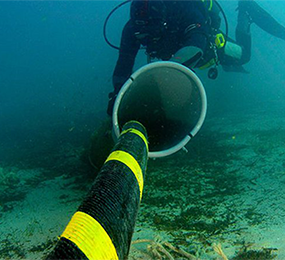
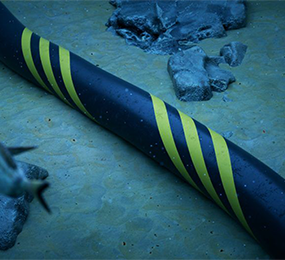
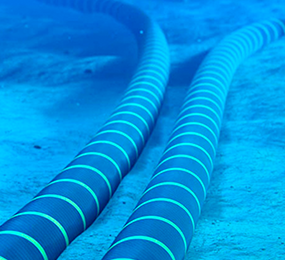
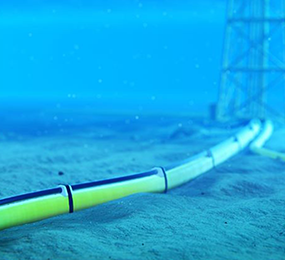
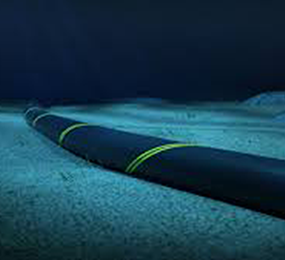
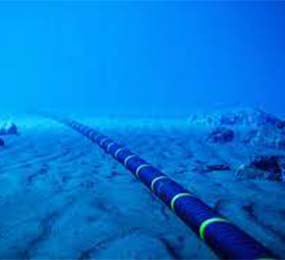
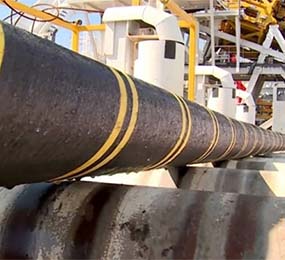
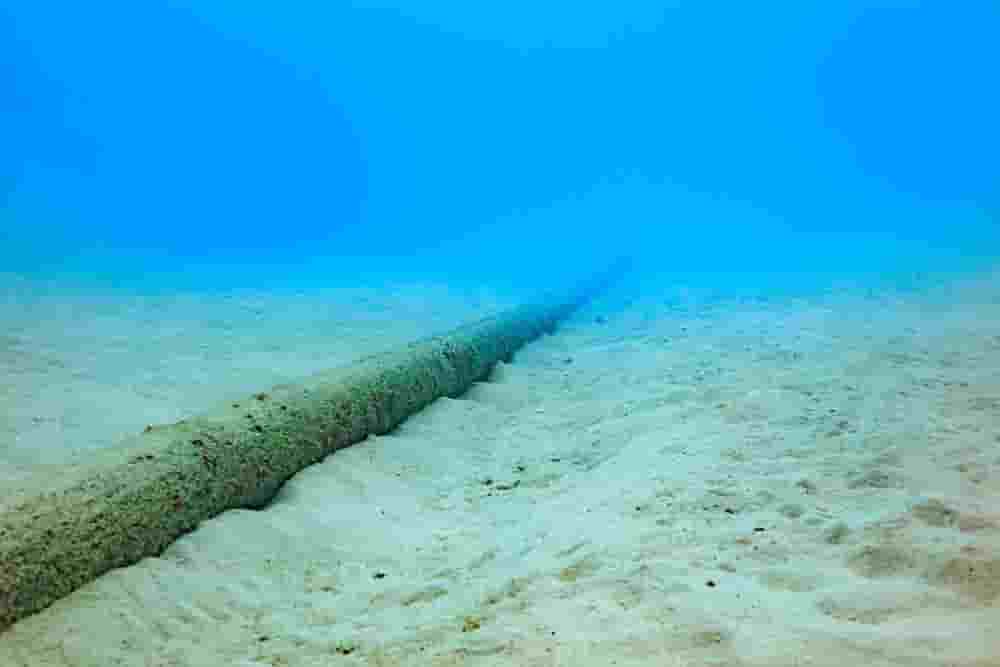
Submarine power cables make this possible by transporting electricity from offshore generation sites directly to onshore substations and national grids.
As offshore wind farms become larger and move further from shore, the demand for reliable, high-capacity submarine transmission infrastructure continues to grow.
Without these cable systems, Europe would struggle to maximise the full potential of its renewable energy investments.
HVDC Technology Is Transforming Offshore Power Transmission
One of the biggest technological advancements supporting Europe's Offshore Supergrid is High Voltage Direct Current (HVDC) transmission.
Compared with conventional alternating current (HVAC) systems, HVDC offers several advantages for long-distance submarine transmission, including lower energy losses, higher transmission capacity, and improved grid stability.
HVDC technology enables electricity generated in one country to be transmitted efficiently across hundreds of kilometres beneath the sea before reaching another national grid.
As offshore renewable projects continue expanding, HVDC is becoming the preferred technology for major interconnection projects across Europe.
Its ability to connect multiple grids while maintaining system stability makes it a critical component of the future Offshore Supergrid.
Energy Security Has Taken Centre Stage
Recent geopolitical developments have reinforced the importance of resilient and diversified energy infrastructure.
Countries are increasingly seeking ways to reduce dependence on imported fossil fuels while strengthening regional cooperation through interconnected electricity networks.
Submarine interconnectors play an essential role by enabling electricity to flow between neighbouring countries during periods of high demand, unexpected outages, or reduced renewable generation.
Instead of relying solely on domestic power generation, interconnected grids provide greater flexibility, improve resilience, and help maintain stable electricity supplies.
Energy security is no longer simply about fuel availability; it is increasingly about building smarter, more connected electricity systems.
Offshore Energy Hubs Are Changing the Way Power Is Distributed
A growing trend across Europe is the development of offshore energy hubs and artificial energy islands.
Rather than connecting individual wind farms separately to shore, these offshore platforms collect electricity from multiple renewable energy projects before distributing it to several countries through interconnected submarine cable networks.
This approach reduces infrastructure duplication, improves transmission efficiency, lowers overall project costs, and supports greater regional cooperation.
Countries including Denmark, Germany, Belgium, and the Netherlands are actively exploring or developing projects that align with this vision, making offshore energy hubs an important building block of Europe's future electricity system.
Digital Innovation Is Improving Cable Reliability
Submarine power cables are expected to operate reliably for decades in some of the world's harshest marine environments.
To achieve this, operators are increasingly adopting digital technologies that improve monitoring, maintenance, and asset performance.
Artificial intelligence, fibre optic sensing, digital twins, remote diagnostics, and predictive maintenance platforms now provide operators with real-time information about cable condition and system performance.
Instead of responding only after faults occur, utilities can detect early warning signs, schedule maintenance proactively, and minimise costly outages.
Digitalisation is becoming just as important as physical engineering in ensuring reliable electricity transmission.
Overcoming Industry Challenges
Although investment continues to grow, several challenges remain.
Increasing demand for offshore transmission infrastructure has created pressure on cable manufacturing capacity, installation vessels, skilled engineers, and specialist contractors.
Long project development timelines, permitting requirements, environmental assessments, and supply chain constraints also require careful planning and close collaboration between governments, utilities, manufacturers, and developers.
Protecting submarine cables has also become a growing priority. As critical infrastructure, these assets face increasing attention regarding physical security, accidental damage from shipping and fishing activities, and resilience against natural hazards.
Addressing these challenges will require continued innovation, investment, and international cooperation.
Sustainability Remains a Core Focus
Expanding offshore transmission infrastructure must go hand in hand with environmental responsibility.
Developers are placing greater emphasis on minimising impacts on marine ecosystems through careful route selection, advanced installation techniques, and comprehensive environmental monitoring.
At the same time, manufacturers are exploring more sustainable production processes, lower-carbon materials, and circular economy approaches throughout the cable lifecycle.
Balancing renewable energy expansion with marine conservation will remain an important consideration as Europe's Offshore Supergrid continues to develop.
Looking Ahead
The coming decade will see unprecedented investment in offshore renewable energy, electricity interconnection, and subsea transmission infrastructure.
Europe's Offshore Supergrid has the potential to reshape how electricity is generated, transmitted, and shared across the continent.
Submarine power cables will not only connect offshore wind farms to national grids but also create an integrated network capable of supporting energy security, accelerating decarbonisation, reducing electricity costs, and improving system resilience.
As governments pursue ambitious climate targets and electricity demand continues to rise, investment in submarine power cable infrastructure will remain essential to achieving a cleaner and more connected energy future.
Conclusion
Submarine power cables have evolved from supporting infrastructure into one of Europe's most strategic energy assets.
They are enabling cross-border electricity trade, unlocking the full potential of offshore wind, supporting the development of offshore energy hubs, and strengthening the resilience of Europe's electricity system.
For more information and group participation, contact us: [email protected]
Leadvent Group - Industry Leading Events for Business Leaders!




Comment