

Sustainable Aviation Fuel and Its Growing Impact on Global Supply Chains
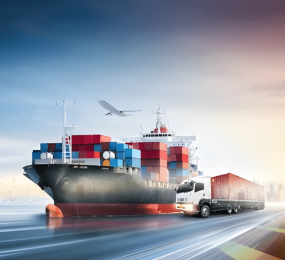
Aviation is one of the hardest sectors to decarbonize. Unlike road transport, which can pivot to electrification, commercial flight depends almost entirely on energy-dense liquid fuels. This reality has placed Sustainable Aviation Fuel at the top of the industry's climate agenda. The transition is far more complex than swapping one fuel for another. It is actively reshaping the global supply chain, from farmlands and waste facilities to refineries, pipelines, and airport infrastructure.
A Market Scaling Fast, But Not Fast Enough
The SAF market is growing at a pace unimaginable just five years ago. Consider the numbers:
- The global SAF market was valued at roughly USD 2.72 billion in 2025, forecast to exceed USD 40 billion by 2034.
- Production reached approximately 1.9 million tonnes in 2025, double the 2024 output.
- Yet this covers barely 0.6% of global jet fuel consumption.
The gap between current output and future need is the defining supply chain challenge of the decade. Demand is expected to surpass 15 million tonnes by 2030, driven by airline commitments, corporate net-zero pledges, and binding government mandates.
Regulatory pressure is mounting fast. The EU's ReFuelEU Aviation regulation sets blending targets at 2% in 2025, rising to 70% by 2050. The UK and Singapore have introduced parallel mandates. Meeting these targets requires a supply chain that, in many parts of the world, does not yet exist at scale.
Feedstocks: Where the Supply Chain Begins
The Sustainable Aviation Fuel supply chain starts long before the fuel reaches an aircraft. Today, nearly 82% of SAF production relies on a single pathway: Hydroprocessed Esters and Fatty Acids (HEFA), using feedstocks such as used cooking oils, animal fats, and agricultural residues. This concentration creates a real vulnerability. Feedstock availability is finite, geographically uneven, and contested by other industries.
Diversifying beyond HEFA is an immediate operational need. Emerging production pathways include:
- Alcohol-to-Jet (ATJ): Uses agricultural sugars and waste streams
- Power-to-Liquids (PtL): Combines green hydrogen with captured carbon
- Gasification-to-Jet: Converts municipal solid waste into synthetic fuel
Each requires entirely new raw material supply chains connecting biomass-rich regions to production facilities and airports. Projects across Colombia, Australia, France, and the United States are already developing these pathways. The network is being built, but it needs to move faster.
Production and Logistics: The Infrastructure Gap
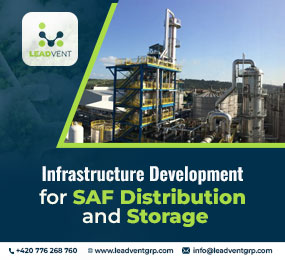
Scaling SAF creates logistical challenges that conventional jet fuel has never faced. SAF facilities need to sit close to feedstock sources, connect to existing refining infrastructure, and integrate with airport fuel delivery systems. Many airports still lack dedicated SAF blending and storage capacity, requiring significant capital investment upstream and downstream.
Certification adds further complexity. Standards such as ICAO's CORSIA scheme, the EU's RED framework, and ISCC require full supply chain traceability, from feedstock origin to aircraft uplift. Every batch must carry verified lifecycle carbon reduction credentials.
The cost dimension remains a critical barrier:
- SAF prices exceed fossil-based jet fuel by a factor of two on average, and up to five times in mandated markets.
- Airlines paid a combined premium of approximately USD 2.9 billion for SAF in 2025 alone.
Closing this gap requires long-term offtake agreements, blended finance models, and genuine economies of scale.
Low-Carbon Fuel and the Geopolitical Dimension
The conventional jet fuel supply chain is centralized and exposed to geopolitical disruption. Recent tanker disruptions through critical maritime chokepoints pushed SAF and jet fuel prices to historic highs in early 2026. It exposed structural vulnerabilities that petroleum-dependent aviation has long carried.
Low Carbon Fuel produced from domestic, waste-based feedstocks offers a different proposition. Supply chains are shorter, more localized, and insulated from crude market volatility. Governments and airlines increasingly recognize this. SAF is no longer just a climate tool — it is an energy security strategy.
The Road to 2030 and Beyond
Between 2030 and 2035, SAF demand is expected to nearly triple. Sustaining that growth requires coordinated investment across the full chain:
- Feedstock development and diversification
- Refining technology at a commercial scale
- Airport-level distribution and storage infrastructure
- Certification and traceability systems
- Public-private financing and offtake structures
The challenge is not purely technical. It is organizational, financial, and political. Progress will depend on cross-sector collaboration, and the decisions made over the next four years will determine whether aviation meets its 2030 targets.
Where the Industry Meets: 2nd Annual World Sustainable Aviation Fuel Forum
Leadvent Group brings the SAF community together at the 2nd Annual World Sustainable Aviation Fuel Forum, taking place on 23–24 June 2026 at the Steigenberger Airport Hotel, Amsterdam, Netherlands. Themed "Clean Fuel. Clear Future: From Promise to Propulsion," this hybrid event connects 150+ industry peers and 35+ speakers across the SAF value chain.
As one of the leading aviation conferences on fuel decarbonization, the forum is designed for senior professionals across:
- SAF and biofuel production
- Airline sustainability and fuel supply chains
- Renewable energy investment and project finance
- Aviation policy, regulation, and carbon markets
Register now for the 2nd Annual World Sustainable Aviation Fuel Forum and be part of the conversation driving aviation's energy transition forward.
Frequently Asked Questions
- What makes SAF different from conventional jet fuel in terms of supply chain structure?
Conventional jet fuel relies on a centralized crude oil refining network. SAF requires a distributed supply chain built around diverse feedstocks — used cooking oils, agricultural residues, and municipal solid waste — that vary by region. This makes SAF supply chains more localized, more complex to certify, and dependent on different upstream industries such as agriculture and waste management.
- Why is SAF more expensive than fossil jet fuel, and when will costs come down?
SAF production remains well below the scale needed for cost efficiency. At current volumes, it carries a price premium of two to five times over conventional jet fuel. Costs will fall as production scales, policy support matures, and long-term offtake agreements provide the investment certainty producers need.
- How do certification standards affect the SAF supply chain?
Frameworks such as ICAO's CORSIA and the EU's RED require every SAF batch to trace back to its feedstock origin with verified carbon reduction data. This traceability requirement spans the full supply chain and remains one of the industry's most significant operational bottlenecks.
- What role does policy play in SAF supply chain development?
Policy drives SAF investment more than any other factor. Binding mandates from the EU, UK, and Singapore create the demand certainty producers need to commit capital. Tax incentives and public-private co-investment reduce early-stage risk. Poorly designed policy, however, can distort markets and slow the progress it aims to accelerate.






Comment