

Floating Solar PV: Clean Energy Meets Water Resource Management
The solar industry has spent decades looking at rooftops and open land. It is now looking at water, and with that, it is rewriting the economics of clean energy.
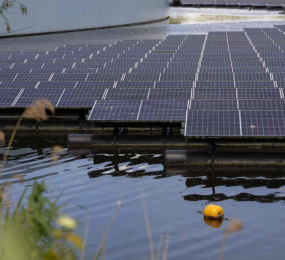
Floating photovoltaics (FPV) are not a marginal experiment. They are a rapidly scaling technology that simultaneously generates electricity, conserves water, and improves water quality, without consuming a single square metre of land. The World Bank puts the global technical potential above 4,000 GW. That number is not a forecast. It is sitting, largely untapped, on the surfaces of reservoirs, lakes, and water bodies right now.
What makes FPV genuinely compelling is not one headline benefit; it is the accumulation of advantages that compound across a project's lifetime. Here is what the industry's most forward-thinking developers already know.
Key Benefits of Floating Solar PV Systems for Water Bodies
Maximising Land Use Without Competing for Ground Space
In densely populated regions, land is fiercely contested. Floating solar panel installations resolve this tension by sitting on underutilised water surfaces, freeing up agricultural land, forests, and developable real estate entirely.
- The World Bank estimates that over 6,600 large water bodies worldwide are suitable for FPV deployment
- Covering just 10% of these surfaces could unlock a technical capacity exceeding 4,000 GW
- Eliminates land-use conflicts common in ground-mounted solar projects
Higher Energy Yields Through Natural Water Cooling
Heat is the silent enemy of solar efficiency. As panel temperatures rise, voltage output drops. Floating arrays draw on the natural cooling effect of the water beneath them, delivering stronger, more consistent performance.
- Studies show FPV systems generate 4–7% more energy than equivalent ground-mounted installations
- Gains are even higher in hot, arid climates
- Lower operating temperatures slow thermal degradation, extending panel lifespan across a 25–30-year project life
This cooling effect improves project economics — a factor that matters to developers and investors evaluating Solar PV assets in competitive energy markets.
Significant Reduction in Water Evaporation
FPV systems shade the water surface, dramatically curbing evaporation, a critical benefit in water-stressed regions. Research on Lake Nasser in Egypt found that covering 50% of the lake's surface reduced evaporation by over 60%.
- Drinking water reservoirs — conserving treated water supply
- Agricultural irrigation basins — stretching water resources further
- Hydropower facilities — preserving reservoir capacity during droughts
This dual function, generating energy while protecting water, has earned growing recognition as a strategic infrastructure asset.
Improved Water Quality and Suppression of Algae Blooms
Harmful algal blooms, driven by sunlight and nutrient-rich water, are a growing public health concern. Floating solar arrays reduce direct sunlight penetrating the water surface. This limits photosynthetic activity and suppresses algae growth.
- Reduced treatment costs and lower chemical inputs
- Improved raw water quality at intake points
- Lower operational risk for drinking water systems
Synergy with Existing Hydropower Infrastructure
Co-location with hydroelectric reservoirs is one of the strongest use cases for FPV. Both systems share existing grid connections and transmission infrastructure. That shared infrastructure cuts capital costs considerably.
- During peak solar hours, FPV generates the bulk of electricity, allowing reservoir managers to conserve water
- Stored water can then be released to generate hydropower during low-light or high-demand periods
- The combined system delivers a more consistent, reliable clean energy supply year-round
A Rapidly Maturing and Cost-Competitive Market
Floating solar is no longer a niche curiosity — it is a scaling global industry.
- Global installed capacity grew from under 1 GW in 2018 to approximately 13 GW by 2022
- The market was valued at around $7.8 billion in 2025, with growth accelerating
- Falling technology costs and improving mooring systems are lowering the Levelised Cost of Electricity (LCOE), making FPV competitive with ground-mounted projects in many markets
For investors, developers, and policymakers, the financial case for floating solar strengthens year on year.
Proven Resilience and Durability
Real-world performance has put early concerns about structural durability to rest.
- In 2024, FPV installations in China withstood a super typhoon with no damage, while nearby ground-mounted systems were significantly impacted
- Projects in India have demonstrated resilience against fluctuating water levels and monsoon conditions
- The IEC is actively developing formal standards for floats, mooring systems, and electrical connectors, reinforcing long-term confidence in FPV assets
Attend the 6th Annual Floating Solar PV Forum
Floating solar has moved well beyond pilot projects. The sector is scaling, and the professionals driving that growth are those who stay ahead of the curve — connected to the latest research, policy shifts, and project intelligence.
The 6th Annual Floating Solar PV Forum, the foremost Floating Solar Event in the industry calendar, is where that exchange takes place. Organised by Leadvent Group, a leading convener of specialist energy conferences in Europe, the forum brings together project developers, technology providers, grid operators, financiers, and regulators — all under one roof.
Attending this forum gives participants direct access to:
- Proven project insights that cut development timelines.
- Financing perspectives that de-risk FPV investment decisions.
- Regulatory and policy updates shaping market access across key regions.
- Technology innovations are reducing the cost and complexity of FPV deployment.
For those looking to scale FPV projects faster, identify the right partners, or understand where the market is heading, this is the most efficient room to be in.
Frequently Asked Questions (FAQs)
1. Can floating solar panels be installed on saltwater bodies like coastal lagoons or tidal estuaries?
Saltwater environments introduce significant corrosion challenges for floats, moorings, and electrical components. Current FPV technology performs best on calm, sheltered freshwater bodies. Saltwater-ready systems exist but remain an active area of development rather than standard commercial practice.
2. How much of a reservoir's surface needs to be covered to meaningfully reduce evaporation?
Industry studies show that covering 10–30% of a reservoir's surface delivers measurable evaporation reduction while preserving ecosystem health. Developers avoid full coverage to maintain ecological balance and allow natural oxygenation of the water.
3. What happens to floating solar panels when water levels drop significantly during a drought?
FPV systems use flexible mooring lines that accommodate natural water level fluctuations. Most installations handle a wide range of depth changes without issue. Extreme or prolonged droughts may require site-specific engineering considerations during project planning.
4. How does a floating solar installation affect fish populations and aquatic biodiversity?
Partial shading from FPV arrays lowers water temperature and suppresses algal blooms — conditions many fish species favour. That said, large-scale coverage without environmental monitoring can reduce light for submerged vegetation. Developers follow best practice by limiting surface coverage to 30% and running ongoing ecological assessments throughout the project lifecycle.




Comment