

Floating Wind vs Fixed Offshore Wind: Understanding the Key Differences
Offshore wind energy has become one of the fastest-growing sources of renewable electricity worldwide. As countries seek to expand clean energy generation and reduce carbon emissions, offshore wind projects are playing an increasingly important role in the global energy transition. While traditional fixed-bottom offshore wind farms have dominated the market for decades, floating wind technology is emerging as a transformative solution capable of unlocking vast new areas for renewable energy development.
Although both technologies harness wind energy at sea, they differ significantly in design, installation, operating conditions, and market potential. Understanding these differences is essential for developers, investors, policymakers, and energy stakeholders evaluating future offshore wind opportunities.
What Is Fixed Offshore Wind?
Fixed offshore wind turbines are installed on foundations that are anchored directly to the seabed. Common foundation types include monopiles, jackets, gravity-based structures, and suction bucket foundations.
These systems are most suitable for relatively shallow waters, typically up to 60 meters deep, depending on seabed conditions and foundation design. Fixed-bottom technology is well-established and currently represents the majority of global offshore wind capacity.
Because the turbines are physically attached to the seabed, fixed offshore wind projects benefit from proven engineering practices, mature supply chains, and extensive operational experience.
What Is Floating Wind?
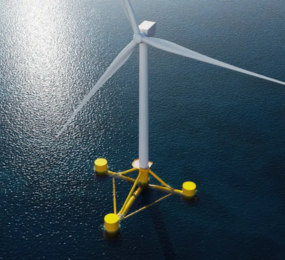
Floating wind turbines are mounted on buoyant platforms that float on the ocean surface and are secured to the seabed using mooring lines and anchors. Rather than relying on fixed foundations, these systems remain stable through advanced engineering and ballast designs.
Floating wind technology enables projects to be deployed in much deeper waters, often exceeding 60 meters and extending to several hundred meters in depth. This opens access to wind resources in locations where fixed-bottom foundations are technically or economically impractical.
As a result, floating wind significantly expands the geographical areas available for offshore renewable energy development.
Water Depth and Site Availability
The most significant difference between the two technologies is water depth capability.
Fixed offshore wind is generally limited to shallow and medium-depth waters where seabed foundations can be installed efficiently. This restriction can limit site availability in regions with steep continental shelves.
Floating wind, however, can operate in deep-water environments where wind resources are often stronger and more consistent. Countries such as Norway, Portugal, Spain, Japan, South Korea, and parts of the United States are particularly interested in floating wind because suitable shallow-water locations are limited.
Installation and Construction
Fixed offshore wind projects require extensive offshore construction activities, including foundation installation, heavy lifting operations, and seabed preparation. Specialized vessels are often needed to transport and install components at sea.
Floating wind projects are typically assembled and integrated at port facilities before being towed to their offshore locations. This can reduce some offshore installation complexity and potentially improve safety and efficiency.
However, floating wind requires specialized port infrastructure, towing operations, and mooring systems that are still developing in many regions.
Cost Considerations
Fixed-bottom offshore wind currently benefits from economies of scale and decades of industry experience, making it the more cost-competitive option in many markets.
Floating wind projects generally have higher costs today due to their relative immaturity, specialized components, and smaller deployment scale. However, industry experts expect costs to decline significantly as commercial deployment expands, manufacturing capacity increases, and supply chains mature.
Many analysts view floating wind as following a similar cost-reduction trajectory to fixed offshore wind over the past two decades.
Energy Performance
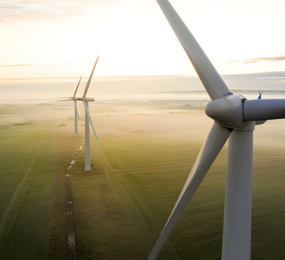
Floating wind projects often have access to stronger and more consistent wind resources because they can be located farther from shore in deeper waters.
These favorable wind conditions can increase energy generation and improve project economics over time. In some regions, higher capacity factors may help offset portions of the higher initial investment costs associated with floating technology.
Environmental and Social Factors
Both technologies contribute to emissions reduction and renewable energy generation. However, floating wind can reduce some seabed disturbance because it requires fewer permanent seabed structures compared to fixed-bottom installations.
Floating wind also allows projects to be located farther offshore, which may reduce visual impacts for coastal communities. At the same time, both technologies require careful environmental assessments to address potential impacts on marine ecosystems, fisheries, and navigation routes.
Future Growth Potential
Fixed offshore wind will continue to dominate many established markets due to its maturity and cost advantages. However, floating wind is widely expected to become one of the fastest-growing renewable energy sectors over the next decade.
The technology has the potential to unlock vast offshore wind resources that were previously inaccessible, supporting national energy security goals and accelerating the transition to clean energy.
As governments increase support, infrastructure investments grow, and technology advances continue, floating wind is likely to become a major complement to fixed offshore wind rather than a replacement.
Conclusion
Floating wind and fixed offshore wind each have important roles to play in the future energy mix. Fixed-bottom projects offer proven, cost-effective solutions for shallow-water locations, while floating wind opens new opportunities in deeper waters with abundant wind resources.
Together, these technologies can significantly expand offshore renewable energy capacity and help countries achieve ambitious climate and energy targets.
Takeaway Point
Fixed offshore wind relies on seabed-mounted foundations and is best suited to shallow waters, while floating wind uses buoyant platforms anchored by mooring systems, enabling deployment in deep-water locations with stronger wind resources and greater long-term growth potential.
For more information and group participation, contact us: [email protected]
Leadvent Group - Industry Leading Events for Business Leaders!
www.leadventgrp.com | [email protected]





Comment