

How Offshore Wind Technology is Evolving
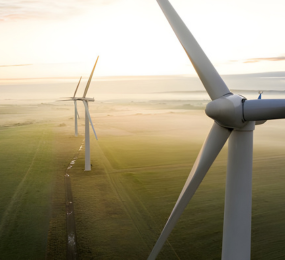
Offshore wind power is revolutionizing the power generation scenario around the globe. The forces behind this transformation are gigantic windmills reaching the height of buildings and the usage of artificial intelligence that can predict malfunctions before they actually occur. Understanding these innovations is of great importance during this energy transition period in the industry.
Turbine Evolution: Scaling up for Success
Offshore wind turbines that are presently in operation max their output more than 14 MW, and the latest versions are close to 26 MW. The Chinese Dongfang Electric Company has developed a windmill having blades that are 310 meters long. Every year, it will produce 100 GWh of electricity, which can be used by approximately 55,000 homes.
This scaling trend brings real benefits to the economy. Bigger turbines reach stronger, steadier winds at higher altitudes, which boosts capacity factors. The transition from 6-8 MW turbines to the gigantic 14+ MW models of today has had a significant impact on project economics. It results in a lower energy production cost and assists offshore wind in competing more with fossil fuels and other traditional energy sources.
Floating Wind: Exploring Deeper Waters
The floating platform technology might turn out to be the most thrilling development in offshore wind energy growth. Some important progress includes:
- New Opportunities: Fixed-bottom foundations are applicable for water depths of about 50 meters at most, but floating structures such as semi-submersible platforms, spar buoys, and tension leg platforms allow for accessibility to much deeper waters.
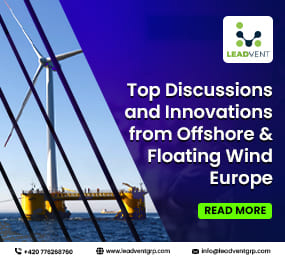
- Innovative Designs: In 2024, Mingyang Smart Energy introduced OceanX. It includes a pair of hybrid drive turbines placed on a single floating base, offering a total capacity of 16.6 MW.
- Shifting the Market: Floating wind technology is a game-changer for places such as Japan and the U.S. West Coast, where continental shelves drop off. It turns offshore wind from a small coastal option into a major potential energy source.
AI's Role in Maintenance and Modernization
New monitoring technology with IoT sensors, along with AI and machine learning tools, helps predict problems before they happen. This change from fixing things after they break to predicting issues before they occur can save companies a lot of money.
Virtual models called digital twins mirror real wind farms. These help operators test ideas, predict how things will work long-term, and run simulations without risking actual equipment. Monitoring in real time, analyzing data, and using drones to inspect equipment make it easier to plan maintenance and prevent sudden breakdowns. This tackles some of the biggest challenges in keeping wind farms running.
Newer Foundation Designs and Combined Systems
New ideas in monopile and jacket foundation designs make building offshore projects in deeper seas possible. Faster installation is now achievable thanks to better shipping technology. A new installation ship built in the U.S. helped fill gaps in infrastructure that delayed work.
Developers with a focus on the future are adding offshore wind to other technologies. They are combining it with energy storage, floating solar, and green hydrogen production. This approach aims to build more reliable power sources that can work whenever needed. Creating green hydrogen is useful. The technology presents ways of storing energy and cutting CO2 emissions in difficult-to-decarbonize sectors such as heavy industry and shipping.
Challenges in Operations
Wind farms that are located offshore and that have been in operation for some time will need to receive good management and maintenance. The offshore wind O&M services market is estimated at around $5 billion in 2025 and is projected to reach approximately $15 billion by 2033.
The industry deals with tough problems. Aging equipment needs a lot of maintenance, critical parts face big failures, vessel markets are tight, and spare parts are hard to get due to supply issues. Tackling these problems calls for fresh ideas. Companies are exploring full-scale digital tools merging operations and reshaping how they work with equipment makers.
Market Dynamics: Growing Despite Challenges
The international offshore wind sector is rapidly expanding and thus achieving a growth rate of 10.12% per year and an increase of 19 GW in new capacity by 2025. However, there are still some issues that are causing complications, such as the increasing costs, supply chain troubles, and unclear policies. China is the frontrunner in the market, accounting for nearly 50% of the total installed capacity globally. Europe continues to expand steadily, while the United States shows promise over the coming years with support from the Inflation Reduction Act.
Be Part of the Discussion at Leadvent's 5th Annual Offshore Wind Conference
Leadvent's 5th Annual Offshore Wind Operations and Maintenance Forum assembles the top names and the most influential persons from the industry to discuss the most significant issues that they face together. The offshore wind conference, which is going to happen on 24th February 2026 in Hamburg, Germany, will be a great opportunity for the industry to learn how to develop O&M solutions that are cost-effective, efficient, and scalable by means of data-driven methods and digital advances.
This offshore wind conference is a great opportunity for you to be updated with the latest trends and be in contact with the people who are deciding the future of offshore wind, if you are in operations, maintenance, asset management, or technology development.
Frequently Asked Questions (FAQs)
- What are the biggest advancements in offshore wind technology?
Bigger turbines with over 14 MW capacity are a major improvement. Floating platform designs now allow installations in deeper ocean areas. Predictive systems using AI are improving maintenance. There is a significant advancement in the merging of various renewable energy sources. The digital innovations like IoT sensors, data analytics, and automated inspection technologies are transforming the management and maintenance of operations.
- How does floating offshore wind differ from fixed-bottom wind setups?
Pioneering offshore systems employ sea-anchored platforms like spar-buoys or semi-submersibles. These arrangements are able to operate in areas where the water depth exceeds 50 meters and are not suitable for traditional fixed-bottom foundations. This approach helps develop energy projects in areas with deeper waters near the coast.
- What are the biggest challenges in offshore wind operations and maintenance?
The biggest obstacles include dealing with outdated machinery that breaks down often, limited availability of jack-up rigs, challenges in acquiring critical spare parts because of shipping difficulties, and increasing costs for upkeep. The resolution of the aforementioned issues demands the implementation of digital solutions, the integration of predictive maintenance techniques, and the concentration on the enhancement of operational efficiency as the root of it all.




Comment