

The Critical Role of Functional Safety in Autonomous Driving Systems
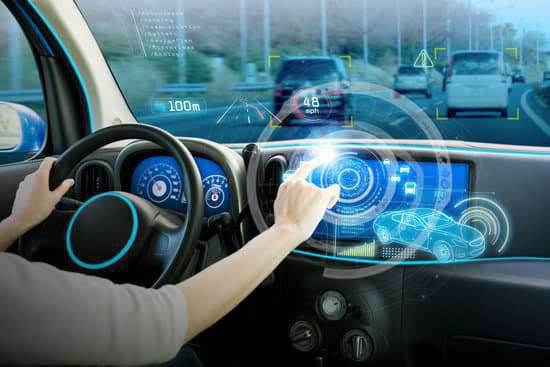
As the automotive industry pivots from human-controlled vehicles to self-driving machines, the definition of safety has undergone a radical transformation. In traditional vehicles, safety often focuses on "crashworthiness"—how well a car protects occupants during an impact. However, in the world of Autonomous Driving Systems (ADS), the priority shifts to Functional Safety: ensuring the electronics and software perform correctly and fail gracefully.
Defining Functional Safety
Functional safety, governed largely by the international standard ISO 26262, is the absence of unreasonable risk due to hazards caused by malfunctioning behavior of electronic and electrical systems. In an autonomous vehicle, the "driver" is a complex stack of sensors (LiDAR, Radar, Cameras), neural networks, and actuators. If a sensor fails or a software bug occurs at 70 mph, the system must have the functional safety protocols to detect the fault and transition the vehicle to a minimal risk condition, such as pulling over to the shoulder.
Redundancy and Reliability
The backbone of functional safety in ADS is redundancy. Engineers design systems with "fail-operational" capabilities. This means if the primary steering processor fails, a secondary system immediately takes over. Functional safety ensures that these backups aren't just present, but are rigorously tested to meet the highest Automotive Safety Integrity Levels (ASIL D), representing the most stringent safety requirements.
Beyond the Code
Modern safety also incorporates SOTIF (Safety of the Intended Functionality), which addresses risks even when no technical failure occurs—such as a vision system being blinded by heavy fog. By integrating functional safety with SOTIF, developers can create a robust framework that anticipates both hardware glitches and environmental uncertainties.
Ultimately, functional safety is the "trust engine" of autonomous mobility. Without the mathematical certainty and rigorous engineering standards it provides, the public adoption of self-driving technology would remain at a standstill.










Comment