

Ensuring Reliability: Standards and Compliance in Subsea Cable Projects
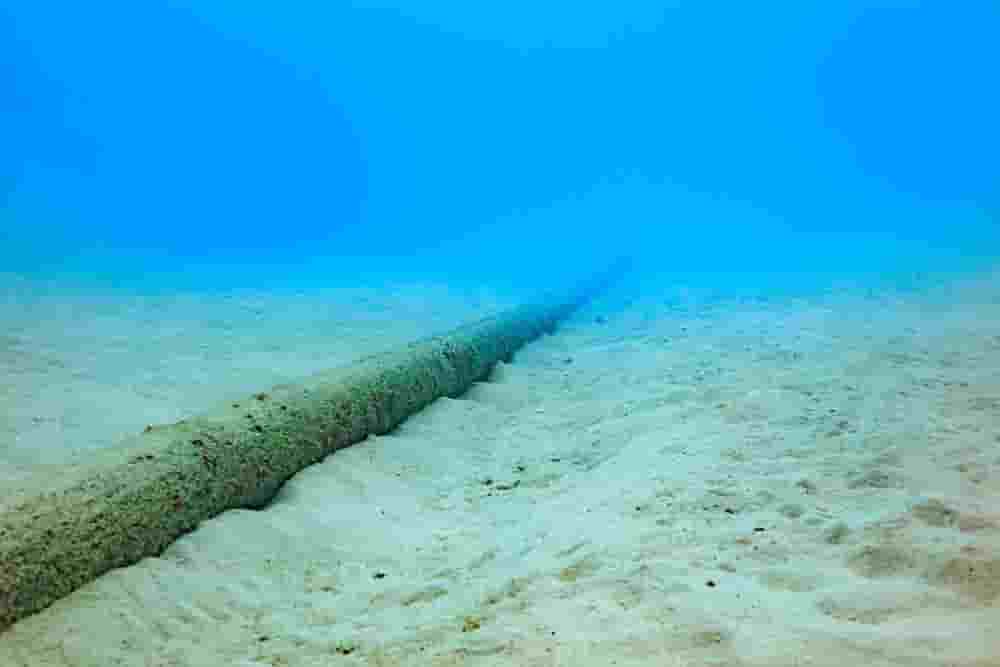
Subsea cables are the invisible backbone of the global digital economy and the energy transition, carrying over $99\%$ of international data and linking offshore wind farms to terrestrial grids. Given the hostile underwater environment and the high cost of repairs, adherence to rigorous international standards and regulatory compliance is not just a legal hurdle—it is a technical necessity.
The Technical Framework
Reliability begins with engineering standards. The International Cable Protection Committee (ICPC) provides the primary industry recommendations for the routing, installation, and maintenance of cables. For power interconnectors and offshore wind exports, CIGRE (International Council on Large Electric Systems) and IEC (International Electrotechnical Commission) standards, such as IEC 60287 and IEC 60853, define the thermal ratings and electrical performance required to prevent catastrophic cable failure under load.
Environmental and Legal Compliance
Navigating the "Permitting Phase" is often the most complex aspect of a project. Developers must comply with the United Nations Convention on the Law of the Sea (UNCLOS), which governs cable-laying rights in Territorial Waters versus Exclusive Economic Zones (EEZs). Locally, projects must undergo stringent Environmental Impact Assessments (EIA) to mitigate disruption to marine benthic habitats and migratory patterns. In many jurisdictions, compliance with Marine Spatial Planning (MSP) is required to avoid conflicts with commercial fishing, shipping lanes, and marine protected areas.
Risk Management and Quality Assurance
Beyond engineering, compliance involves rigorous Quality Management Systems (QMS). Subsea assets must be certified for mechanical resilience—specifically against "external aggression" such as anchor drags or fishing gear entanglement. Compliance with ISO 9001 for manufacturing and ISO 14001 for environmental management ensures that the entire lifecycle, from the factory floor to the seabed, meets global safety and sustainability benchmarks.
As subsea networks grow more dense, the alignment of technical precision with international maritime law remains the only way to ensure the long-term viability of these critical infrastructures.
Visit our website to know more: https://www.leadventgrp.com/events/6th-annual-subsea-cable-installation-asset-management-reliability-forum/details
For more information and group participation, contact us: [email protected]
Leadvent Group - Industry Leading Events for Business Leaders!
www.leadventgrp.com| [email protected]



Comment