

How Sustainable Marine Fuels with Biofuels Contribute to the Decarbonization of Global Shipping
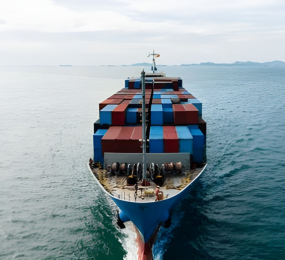
Shipping moves more than 80% of global trade, yet it accounts for roughly 3% of the world's total greenhouse gas emissions annually. For an industry this central to the global economy, that is a number that can no longer be quietly managed — it has to be actively reduced.
The regulations are already here. The EU Emissions Trading System now requires full compliance from shipping in 2026, and the IMO's Net-Zero Framework is pushing the entire sector toward a 2050 emissions target. Shipowners are no longer weighing whether to transition — they are deciding how.
That is where biofuels and sustainable marine fuels (SMFs) come in. This blog looks at why they are the most practical and deployable answer available to the industry right now, and what it will take to scale them.
Why the Urgency Is Real
The shipping industry doesn't just emit CO?. It also contributes approximately 15% of the world's most harmful air pollutants, including nitrogen oxides (NOx), sulfur oxides (SOx), and methane (CH?). The IMO's landmark Net-Zero Shipping Framework, approved in April 2025, introduces:
- Fuel intensity standards for vessels
- An emissions levy for non-compliant ships
- Financial incentives for vessels running on zero- or near-zero (ZNZ) fuels
These aren't distant policies. They are reshaping the economics of shipping right now.
The Case for Biofuels: A Practical Bridge to Net Zero
Among all alternative fuel options, biofuels stand out as the most accessible near-term pathway. Here's why:
- Drop-in compatibility: Biofuels such as Hydrotreated Vegetable Oil (HVO) and Fatty Acid Methyl Ester (FAME) can blend with conventional marine fuels and run in existing engines without major retrofits.
- Immediate deployment: Unlike hydrogen or ammonia, which require entirely new infrastructure and purpose-built vessels, biofuels can be adopted today.
- Proven GHG reductions: On a well-to-wake lifecycle basis, waste-based biofuels deliver significantly lower carbon intensity than conventional heavy fuel oil.
Major shipping companies, including Maersk, have already incorporated biodiesel and bio-methanol into their near-term fuel strategies. The trajectory is clear: biofuels are not a future option. They are an active decarbonization lever available right now.
Market Growth: The Numbers Tell the Story
The sustainable marine fuels market is on a steep upward curve:
- USD 12.5 billion in 2025
- Projected to reach USD 39.2 billion by 2032
- Growing at a CAGR of 14%
Global production of advanced biofuels is expected to reach 23 million tonnes of oil equivalent (Mtoe) by 2026, up from 11 Mtoe in 2023. Yet shipping's full decarbonization through biofuels alone would require around 250 Mtoe annually, underlining that biofuels are a crucial pillar, not a standalone solution.
Infrastructure: The Invisible Bottleneck
Scaling sustainable marine fuels requires more than just production. The supply chain, covering storage, blending, bunkering, and certification, must evolve in parallel. Ports that invest early in green fuel infrastructure, such as the Port of Amsterdam, are positioning themselves as critical nodes in the clean shipping ecosystem.
Key infrastructure challenges include:
- Feedstock sourcing at a sustainable scale
- Bunkering network readiness across global trade routes
- Certification and sustainability standards that are harmonized internationally
- Financing frameworks to de-risk early-stage infrastructure investment
The European Investment Bank (EIB) and institutions like it are stepping in with public financing structures to drive private sector commitment. The gap between ambition and deployment will close only through coordinated investment.
Beyond Biofuels: A Multi-Fuel Future
While biofuels serve as the most viable bridge today, the long-term decarbonization of shipping will rely on a portfolio of fuels. Green ammonia, e-methanol, hydrogen, and synthetic fuels will each serve different vessel types and trade routes. The concept of submarine marine fuels, covering advanced, low-emission fuels used across deep-sea and ocean-going vessels, represents the ambition of a sector reimagining its energy foundation entirely.
The maritime industry is no longer debating whether to transition. The question now is: how quickly, through which pathways, and with whose support?
Be Part of the Solution: World Sustainable Marine Fuels Forum 2026
The conversation about decarbonizing global shipping needs a stage, and that stage is the World Sustainable Marine Fuels Forum, a premier Marine Fuel Event hosted by Leadvent Group, one of Europe's leading B2B conference organisers.
Taking place on 27–28 May 2026 at the Radisson Blu Hotel Amsterdam Airport, Amsterdam, Netherlands, the forum is available to attend both in person and virtually.
This two-day forum brings together 150+ industry professionals, 35+ expert speakers, and 10+ sponsors from organisations including Wärtsilä, Lloyd's Register, Eni Trade & Biofuels, Bureau Veritas, ING Bank, MOL Group, Siemens Energy, Wood Mackenzie, Fortescue Energy, and the European Investment Bank.
What to expect:
- Panel discussions and interactive World Café sessions
- Case studies on biofuel adoption and green fuel transitions
- Policy updates on IMO, EU ETS, and FuelEU Maritime
- Dedicated 1-to-1 meetings with senior decision-makers across the maritime and energy sectors
- Exhibition featuring the latest sustainable fuel technologies and innovations
Whether you represent a shipping company, fuel supplier, port authority, financial institution, or technology provider, this is where the future of maritime energy takes shape.
If you are a shipping professional, fuel producer, port operator, or energy investor looking to stay ahead of the decarbonization curve, this is the forum where those conversations happen. Secure your place at the World Sustainable Marine Fuels Forum and connect with the people and ideas driving real change in global shipping.
Reserve your seat at the World Sustainable Marine Fuels Forum 2026.
Frequently Asked Questions
1. Can biofuels realistically power large ocean-going vessels, or are they only suited for short-haul shipping?
Yes. Biofuels such as HVO are already being used on deep-sea routes by major container lines and tanker operators. Because they are drop-in fuels, they can power large vessel engines without modification, making them viable across vessel classes and voyage lengths.
2. How do biofuel blends affect vessel performance and engine maintenance?
Lower-blend biofuels (B20–B30) have been shown to perform comparably to conventional marine fuel, with some studies noting marginal improvements in particulate emissions. Higher blends require attention to cold-flow properties and compatibility checks with seals and fuel system components, though these are manageable with standard supplier guidance.
3. With the EU ETS now covering shipping, how quickly will the cost premium of sustainable marine fuels close?
The ETS levy significantly raises the effective cost of fossil fuel use, while SMF producers benefit from carbon pricing signals to invest in scale. Industry analysts at Wood Mackenzie and others forecast the cost gap between biofuels and conventional bunker fuel to narrow materially by 2027–2028 as production capacity and carbon pricing converge.
4. What sustainability criteria must biofuels meet to qualify under IMO and EU regulations?
To count toward fuel intensity targets under FuelEU Maritime and the IMO framework, biofuels must meet specific lifecycle GHG thresholds and be certified under recognized schemes such as ISCC or RSB. Feedstocks must come from non-food, non-land-use-change sources, meaning waste oils, agricultural residues, and municipal solid waste are preferred over virgin crops.





Comment